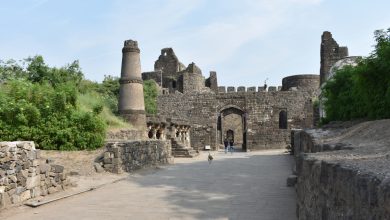
Before cities stood with marble and stones, something more ancient existed in India. They were caves! Silently shaped by humans, caves became places of worship, meditation, burial and artistic expression. As we talk about caves, the Ellora Caves stand out among many. Located in Aurangabad, they showcase the history of Indian rock-cut architecture.
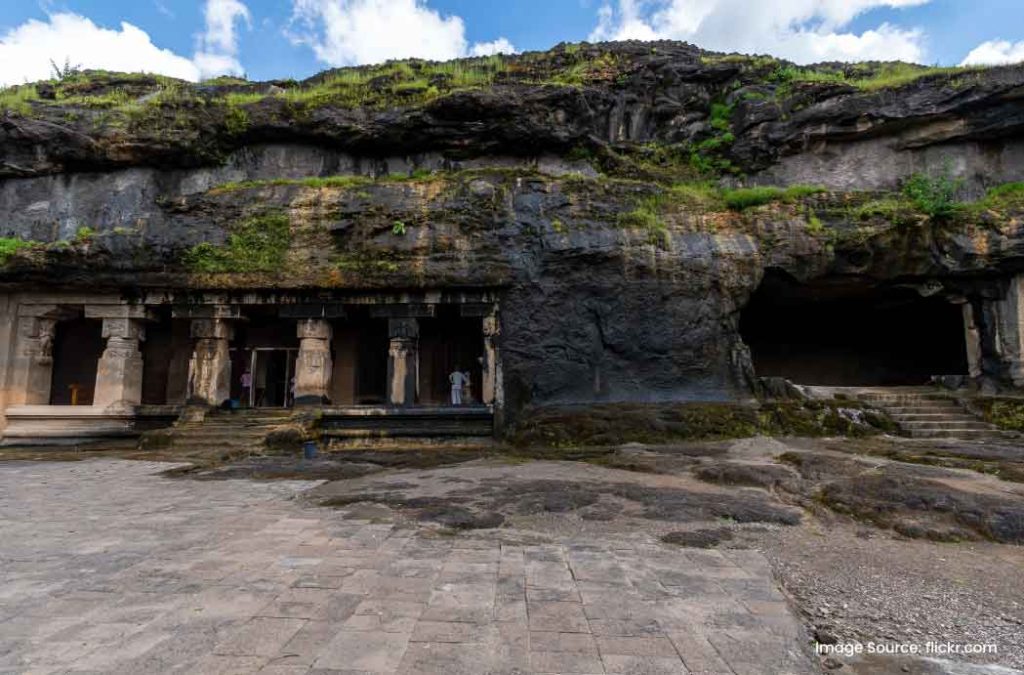
Carved between the 6th and 10th centuries CE, Ellora is more than an architectural marvel. It stands as a powerful symbol of religious harmony. Unlike many other cave complexes that focus on a single faith, Ellora brings together three major religious traditions. You get to learn about Buddhism, Hinduism and Jainism, all together.
No matter if you are a history buff or a travel enthusiast, the Ellora Caves are sure to encircle you with unique tales. Exploring these caves can be confusing due to their massive size. So, check out this blog for planning a visit to Ellora conveniently.






Discovering the History of Ellora Caves
Historical caves in India have tales of spirituality and mystery. While some features of caves are not known to date, others are common in many. Did you know the Ellora Caves were constructed over several centuries? They are roughly from 600 CE to 1000 CE, making them extremely historic for wanderers.
These caves were not built by any one community or people from just one region. Various dynasties contributed to their development. The Rashtrakutas, Chalukyas and Kalachuris made the most valuable contributions. Hence, you get to see the evolution of religious architecture in India. Each cave shows transitions in artistic styles, iconography and spiritual themes.
Ellora was an important trade route location in ancient India. So, the caves contributed to its development as a religious and cultural centre. Interestingly, many monks, pilgrims, traders and rulers played roles in its growth.
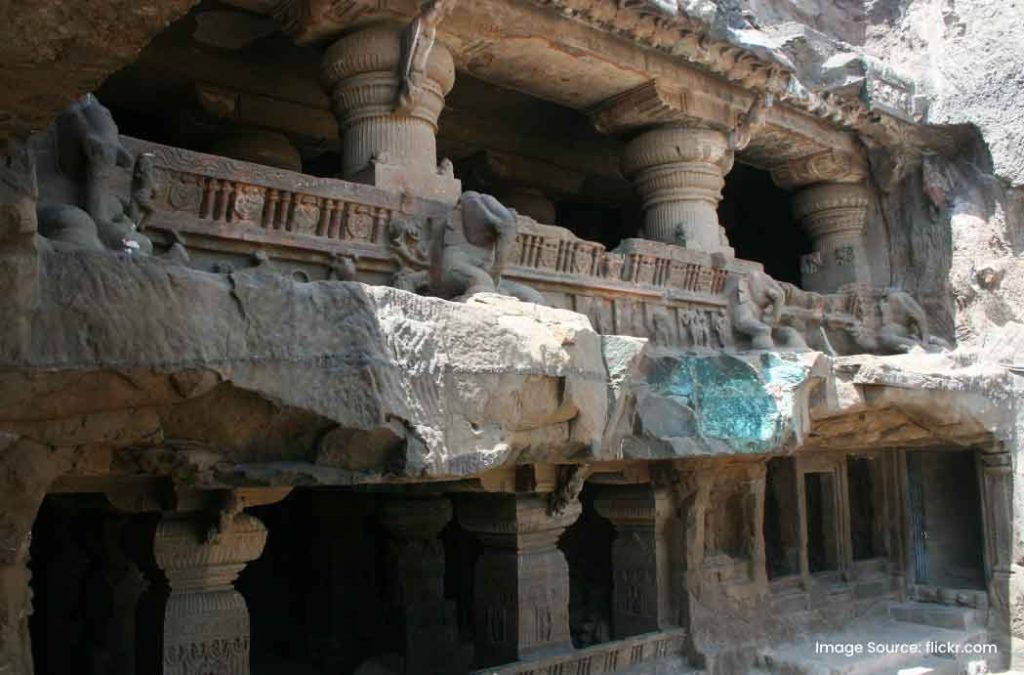
The earliest caves at Ellora are Buddhist caves (Caves 1–12), followed by Hindu caves (Caves 13–29) and finally Jain caves (Caves 30–34). This chronological arrangement offers a glimpse into how religious and cultural shifts shaped artistic expression over time.
Ellora Caves were designated a UNESCO World Heritage Site in 1983. In today’s time, they are recognised for their outstanding universal value. If you wish to explore them, book affordable hotels in Aurangabad for a pleasant stay.
Ellora Caves: Navigating Through the Ancient Rock-Cut Structures
1. Buddhist Caves (Caves 1 to 12)
As you enter Ellora, your journey begins with the Buddhist caves. They were the earliest group at Ellora. You can witness monasteries (viharas) and prayer halls (chaityas), as these caves catered to spirituality. They are also one of the important Buddhist pilgrimage places in India.
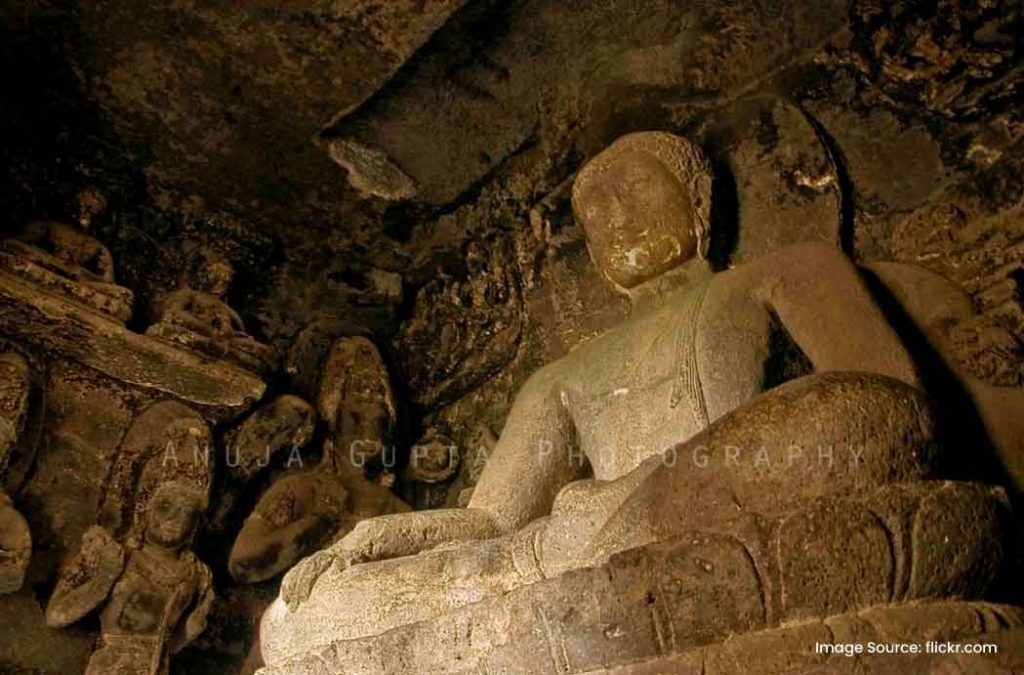
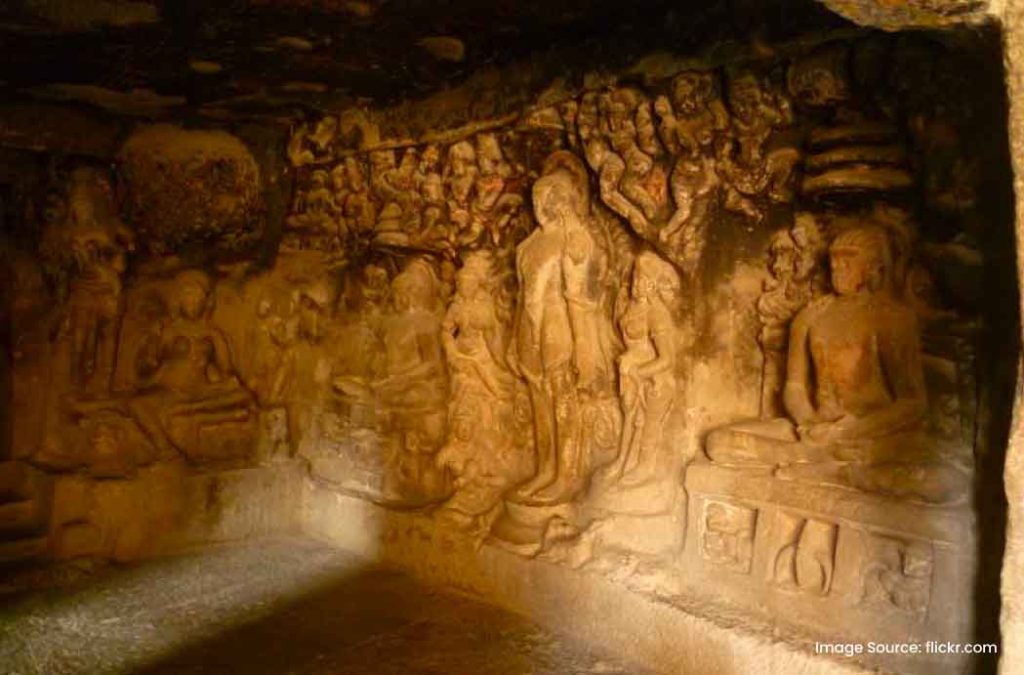
When you walk through them, you can see simplicity in their exteriors. However, they are rich in their interiors. The caves are known for their massive halls with rows of pillars and small cells for monks. You also see distinctive sculptures of Buddha in various forms. These sculptures showcase how Buddhas preached, meditated or taught the disciples.
Cave 10
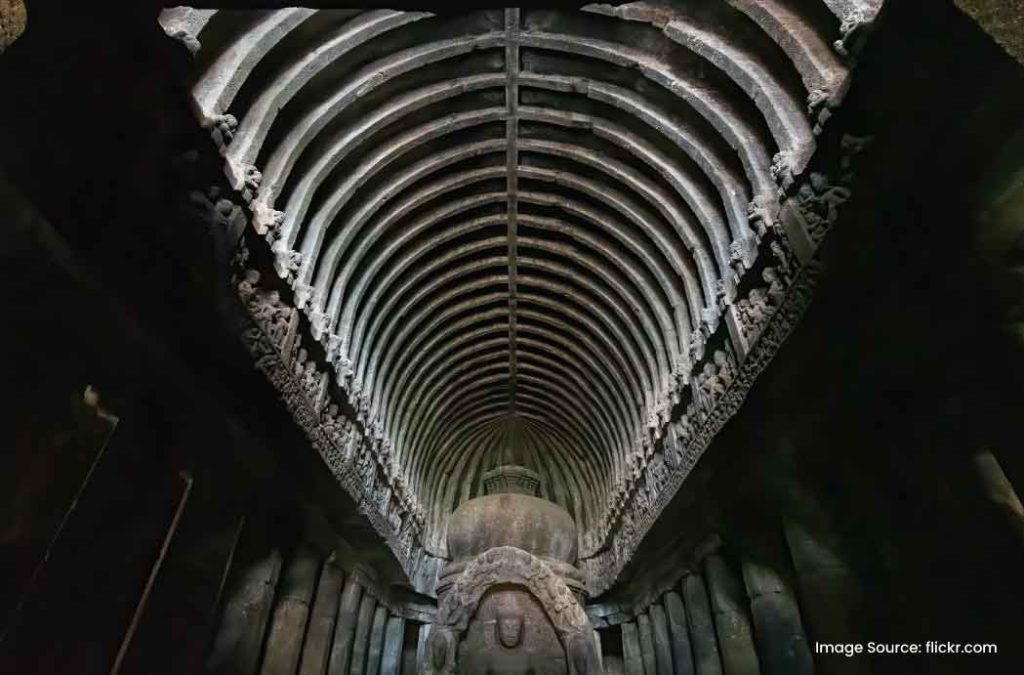
One of the most notable Buddhist caves is Cave 10. It is popularly known as the Vishvakarma Cave or Carpenter’s Cave. Once you enter the cave, you can witness a large prayer hall. Interestingly, it has a huge stupa at the end and a seated figure of the Buddha.
The artisans carved the ceiling to imitate wooden beams. Such a beautiful space showcases the ability of stone artisans back then. If you wish to explore the caves beautifully, book affordable hotels in Nashik or Aurangabad for a lovely stay.
Cave 12
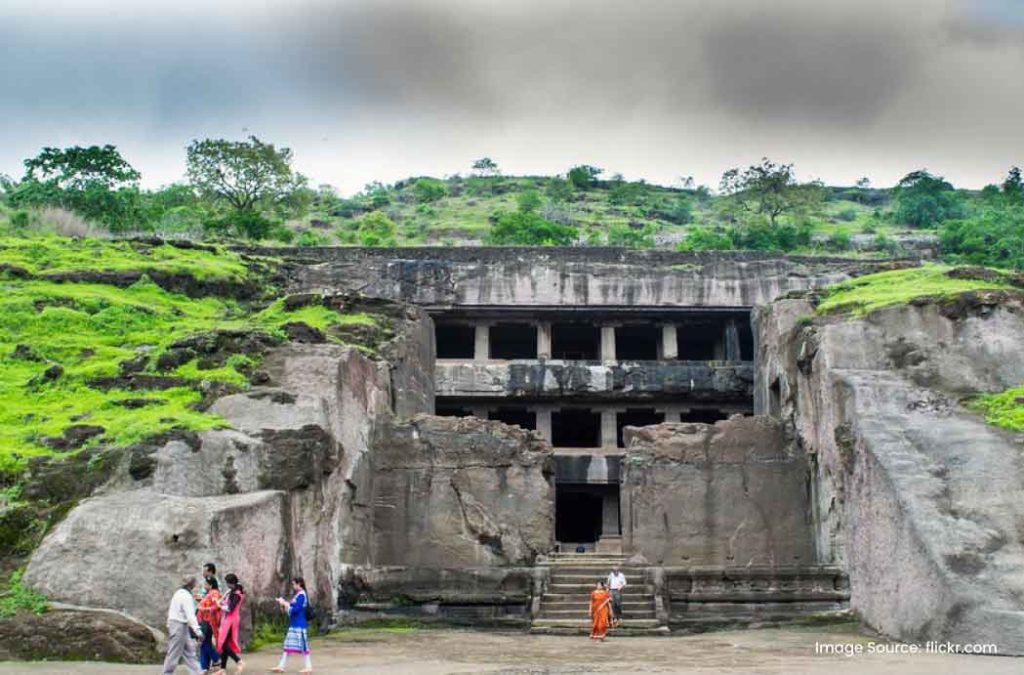
Next, you must pay special attention to Cave 12. It is popularly known as Teen Tal, meaning three stories. Do you know it is one of the largest Buddhist caves at Ellora? Having three levels, each is supported by numerous pillars. You can see elaborate sculptures and shrines inside. It is one of the best places to visit in Aurangabad to witness Buddhist architecture.
If you wish to explore Buddhist structures, plan a visit to the Kanheri Caves in Mumbai for witnessing history like never before!
2. Hindu Caves (Caves 13 to 29)
The Ellora Caves are one of the most famous historical monuments of India. So, your next journey begins from Cave 13. The Hindu caves represent a dramatic and elaborate phase of construction at Ellora. Ancient craftsmen mainly built these caves between the 7th and 9th centuries CE. It was when the Rashtrakutas were in power.
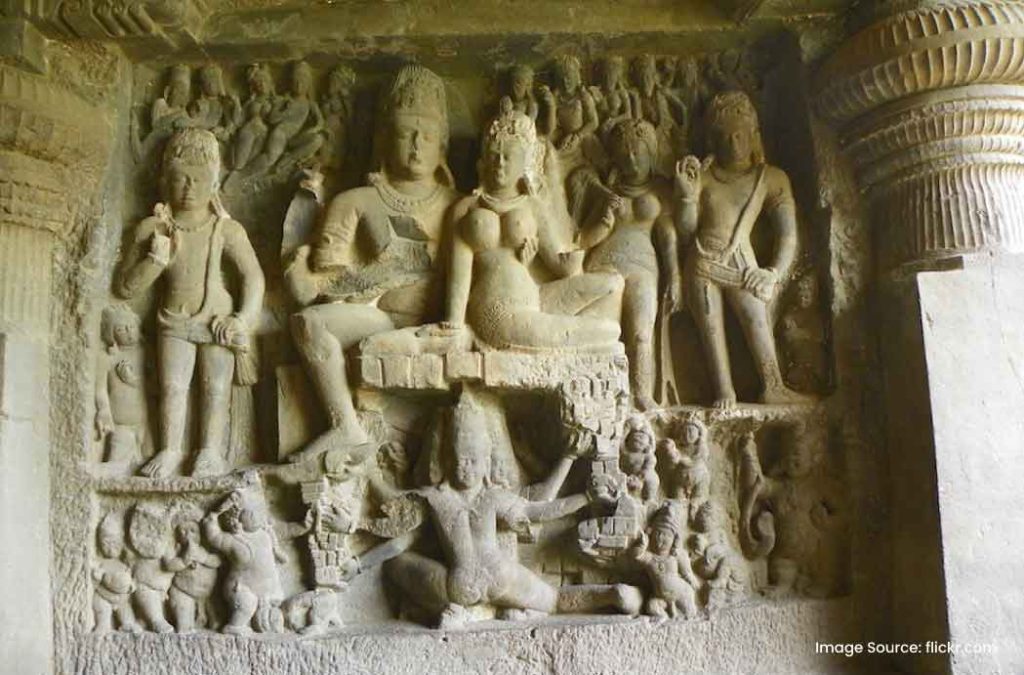
Compared to the Buddhist caves, the Hindu caves are larger and more ornate. You can also witness the architectural differences as they show more ambition and precision. The caves feature scenes from Hindu mythology, especially stories related to Shiva and Vishnu.
Cave 16
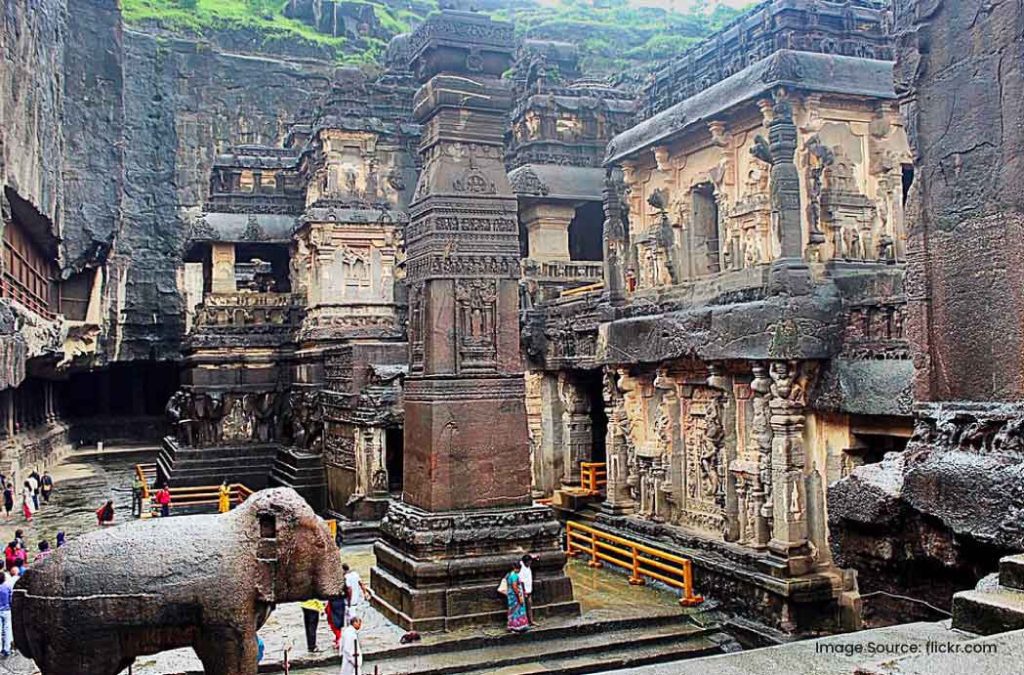
Cave 16 truly deserves a special mention due to the presence of the Kailasa Temple. Do you know this temple is one of the largest monolithic rock-cut structures in the world? No wonder it attracts travellers from all across the globe. It was commissioned by the Rashtrakuta king Krishna I in the 8th century.
Dedicated to Lord Shiva, the place of worship represents Mount Kailasa. As it is known to be the mythical abode of Shiva, it holds immense importance at Ellora. What makes it extraordinary is that it was carved from a single rock! Starting from the top of the cliff and moving downward, it showcases jaw-dropping craftsmanship.
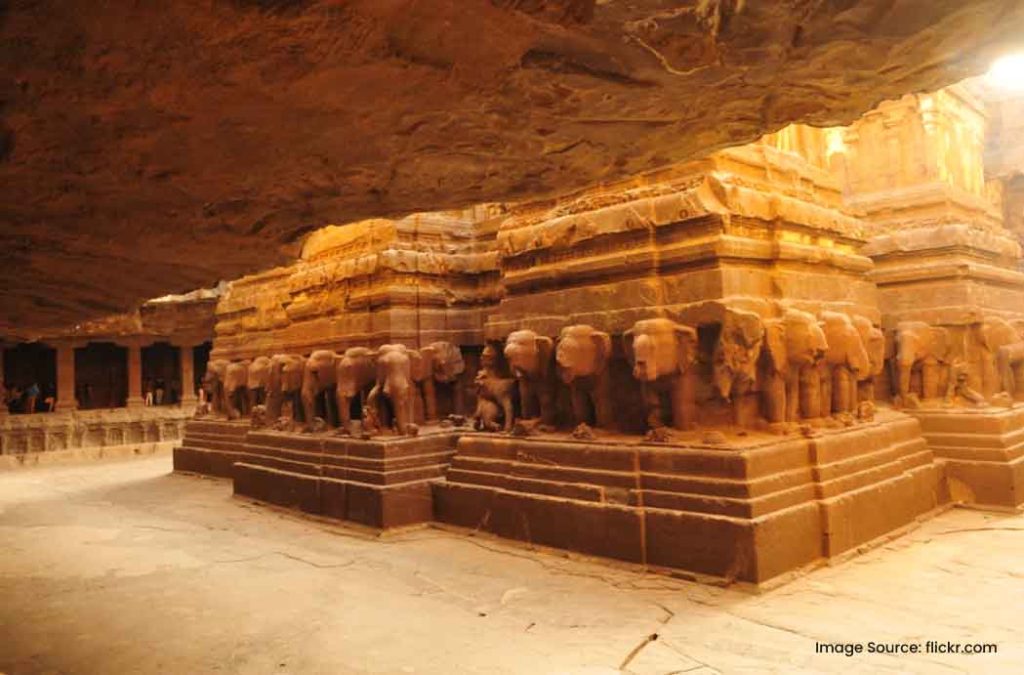
Many believe that artisans removed an estimated 200,000 tonnes of rock to create this structure. What’s more? The temple complex also has a gateway, courtyard, assembly hall, main shrine and subsidiary shrines. Being one of the unique Shiva temples in India, you can also see massive sculpted elephants. Even the walls here tell you stories, as they depict scenes from the Ramayana and Mahabharata.
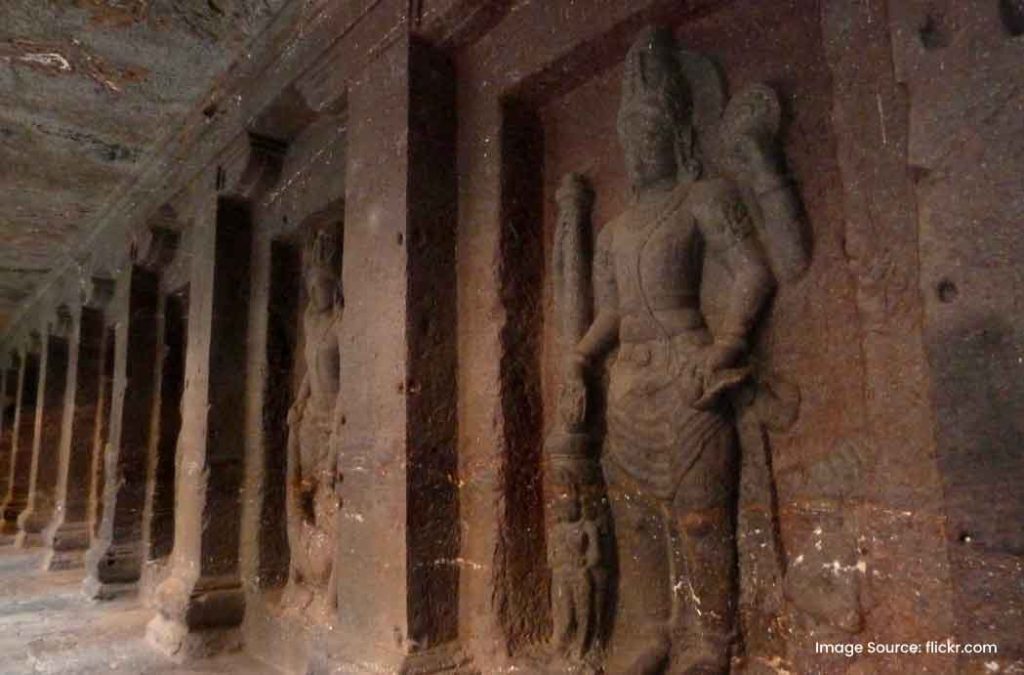
Do not forget to see another striking sculpture here. It shows Ravana shaking Mount Kailasa, attempting to uproot Shiva’s abode. Such a dynamic composition and detailed carving demonstrate exceptional skill. To witness this Indian rock-cut architecture, make sure to book affordable hotels in Aurangabad well in advance.
3. Jain Caves (Caves 30 to 34)
Being one of the best places to visit in Maharashtra, Ellora Caves surprise you with every step. They are also home to the famous Jain caves. Do you know that these are the last group of caves constructed at Ellora? They date from the 9th to 10th centuries CE and show highly refined work.
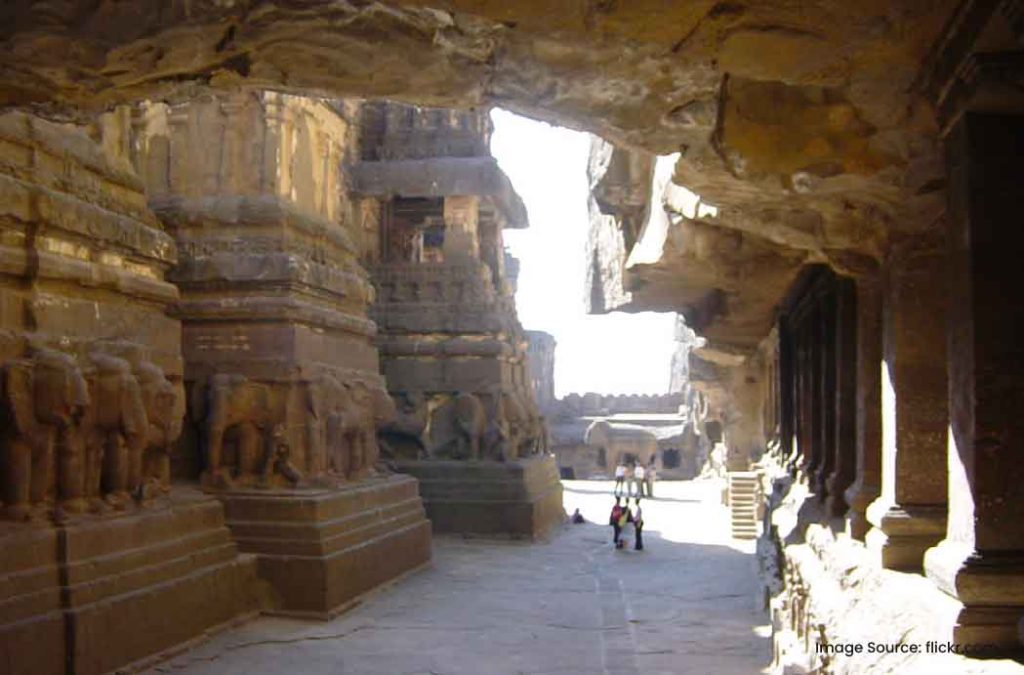
Though fewer in number, you get to see principles of Jainism at these caves. With sculptures, the caves showcase asceticism, non-violence and spiritual purity. These sculptures are delicate and intricate. What’s more? They also precisely display the Tirthankaras (spiritual teachers) of Jainism in meditative poses.
Cave 32
You have to especially visit Cave 32, also known as Indra Sabha. Being one of the most impressive Jain caves, you can see a monolithic shrine. With beautifully carved pillars, each corner tells you a story.
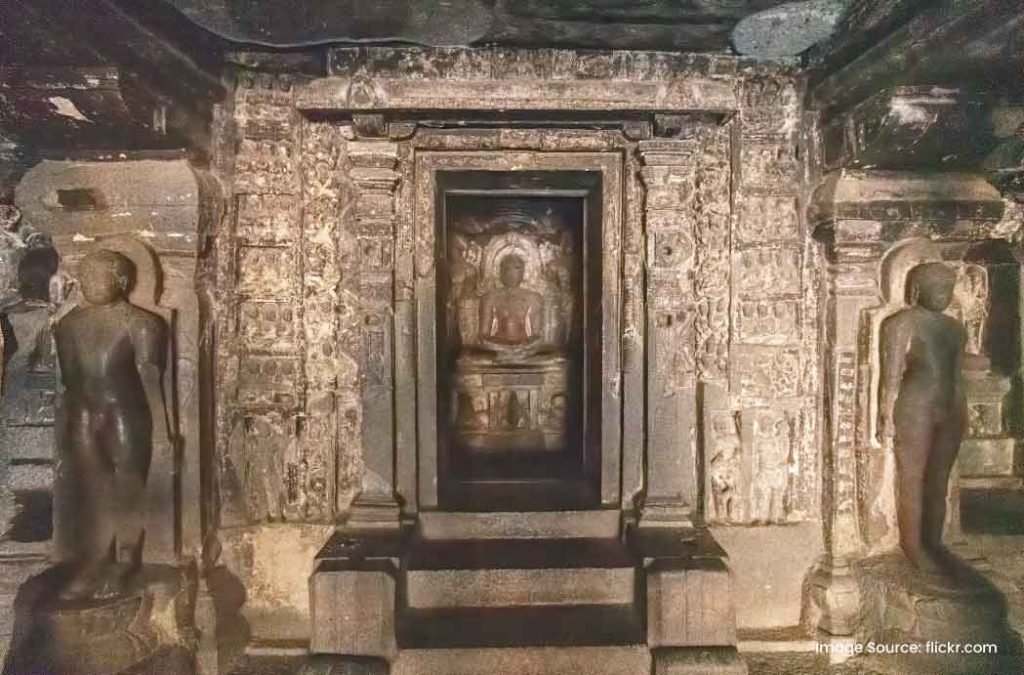
Do not miss the awe-inspiring ceilings, decorated with elaborate lotus motifs. You also get to see walls containing fine sculptures of deities and guardians. So, make sure to book affordable hotels in Nashik or Aurangabad for a comfortable stay.
Unveiling the Architectural Techniques of Ellora Caves
If you are an architecture enthusiast, Ellora is one of the best world heritage sites in India. The group of caves is a masterpiece of rock-cut architecture. Unlike structural temples built from assembled blocks, Ellora’s monuments were excavated directly from solid basalt rock.
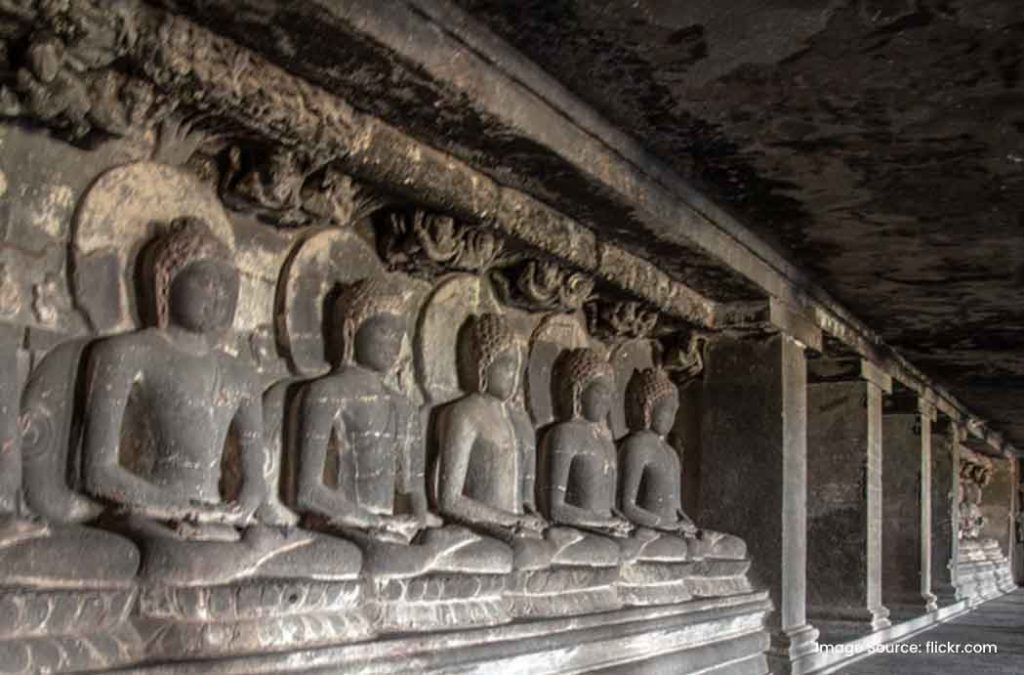
Did you know artisans began carving from the top of the cliff downward? This top-down approach helped prevent structural collapse. What you see today is an effort of careful planning and accurate alignment. Further, it showcases how people in ancient times made measurements precisely.
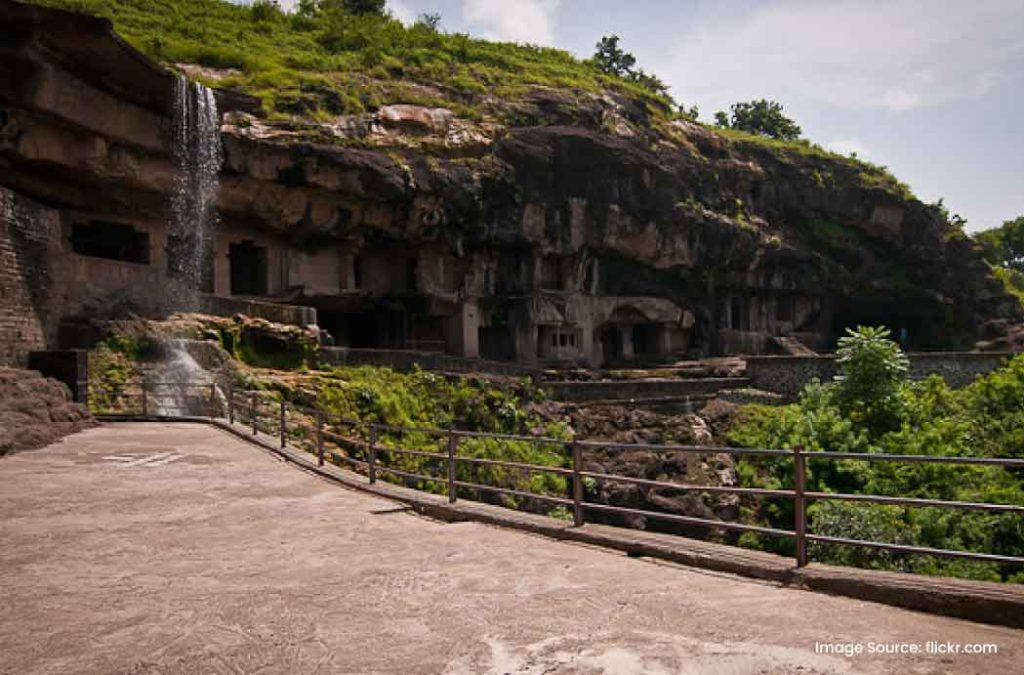
According to the research, simple tools were used, including chisels and hammers. However, the results you see today look highly sophisticated. Imagine the craftsmanship of artisans as they carved pillars, beams, staircases and sculptures from the same rock mass. No wonder these caves are one of the best engineering marvels in India, featuring age-old artistry.
How to Reach Ellora Caves?
By Air
- If the air route is your preference, the nearest airport to Ellora Caves is Aurangabad Airport, situated about 35.7 kilometres away.
- Aurangabad Airport has regular flight connections to Mumbai, Delhi and Hyderabad.
- You can take taxis or app-based cabs from the airport.
- The other options include Pune Airport (305 kilometres) and Mumbai Airport (321 kilometres).
By Rail
- The nearest railway station to Ellora Caves is Aurangabad Railway Station, about 28.5 kilometres away.
- From here, you can opt for taxis or state transport buses that are available from the railway station. It takes about 45 minutes to reach the caves.
- Another railway option is the Manmad Junction, which is around 119 kilometres away. It takes approximately 2.5 to 3 hours.
By Road
The Ellora Caves are located about 30 kilometres from Aurangabad. You can easily reach there in 45 minutes to 1 hour via a road drive. Let’s understand different ways to reach it via road.
- You can opt for regular MSRTC buses, private taxis and rental cars operating between Aurangabad and Ellora.
- If you are travelling from Mumbai, the Ellora Caves are approximately 336 km away. The journey takes around 7 to 8 hours via Nashik.
- Pune is about 310 kilometres from Ellora. So, you need to travel 5 to 6 hours by car via Ahmednagar.
- Nashik is nearly 173 km away. You can reach n about 4 to 5 hours by road.
- Shirdi is around 100 km from Ellora. The drive takes approximately 2 to 3 hours.
Check the Best Time To Visit Ellora Caves
Winter Season (October to March)
Winter is the most ideal time to visit Ellora Caves. The temperature ranges between 15°C and 30°C, making it comfortable for exploring the caves on foot. The weather remains pleasant throughout the day. So, it is best to book hotels in Aurangabad or Nashik well in advance to avoid high prices.
Monsoon Season (July to September)
As the city experiences rainfall, the surrounding landscape becomes lush green. The weather is cooler compared to summer. While occasional heavy rainfall may cause minor travel inconvenience, you can still consider exploring the caves. If you truly enjoy scenic beauty and fewer crowds, this season is for you.
Summer (April to June)
Summer is not a favourable time to visit Ellora Caves. The temperatures can rise above 40°C during peak summer. The hot and dry climate makes walking uncomfortable. So, afternoon visits can be particularly exhausting due to strong sunlight. While hotels in Nashik or Aurangabad may be cheap, exploring the caves can be exhausting.
Practical Tips for Visiting Ellora Caves
- Start your visit early in the morning to avoid crowds and heat.
- Wear comfortable walking shoes, as the cave complex is large. It involves walking and climbing steps.
- Carry a water bottle to stay hydrated, particularly during the summer season.
- Hire a certified local guide at the entrance if you want detailed historical and architectural information.
- Keep at least 3 to 4 hours to explore the major caves properly.
- Carry a small map of the caves or use mobile apps to navigate the 34 caves efficiently.
- Avoid touching carvings and sculptures to help preserve the ancient artwork.
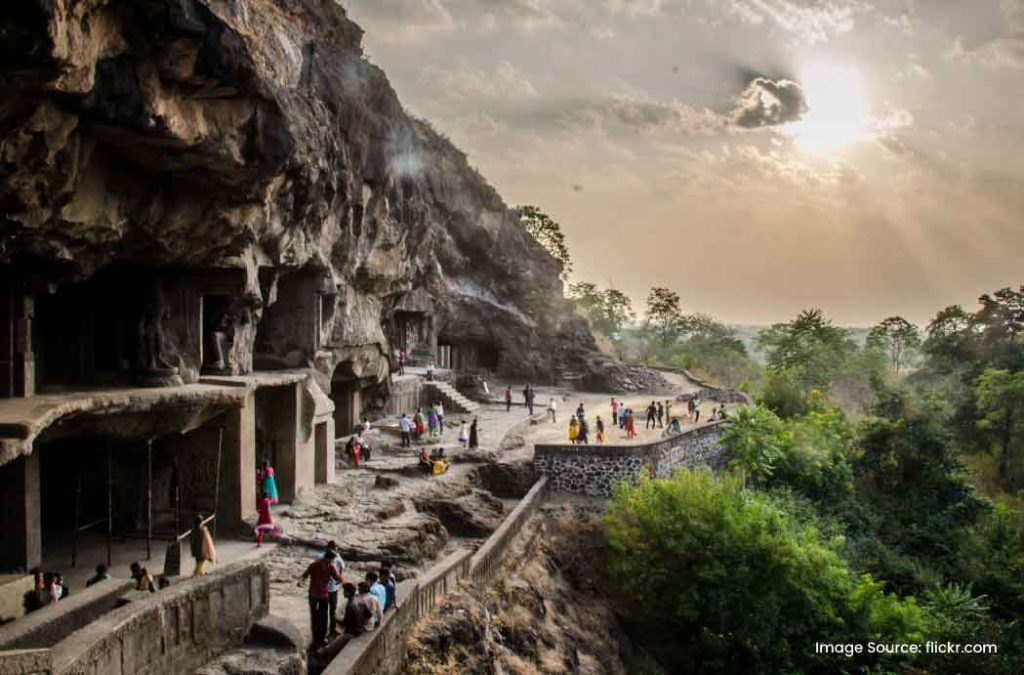
- Photography is allowed. Avoid using flash inside caves.
- Plan restroom and refreshment breaks in advance, as facilities are available near the entrance area.
- While MSRTC buses run from Aurangabad to Ellora, taxis are faster and more convenient.
- Consider visiting Daulatabad Fort and Bibi Ka Maqbara in Aurangabad for a full cultural experience.
Walking Through the Heritage of Ellora Caves
The Ellora Caves are one of the greatest artistic and architectural achievements in human history. The minute you see them, you get to see more than construction. Here, the rock structures talk about devotion, creativity and technical brilliance. They also showcase the spiritual richness and cultural harmony of ancient India.
Being one of the top-rated places to visit in Maharashtra, the caves give you a powerful message of tolerance and unity. Even in today’s time, these caves inspire scholars, artists and wanderers. Lastly, they showcase the human capacity of transforming one site into timeless beauty and grandeur.