Amidst the dramatic sands of the Thar Desert, the state of Rajasthan takes pride in its history and heritage. It is home to multiple museums, ancient temples and palaces that speak of grandeur. As you plan to explore the state, start with the beautiful city of Jaisalmer. Wondering what’s unique for you? That’s the Jaisalmer Fort.
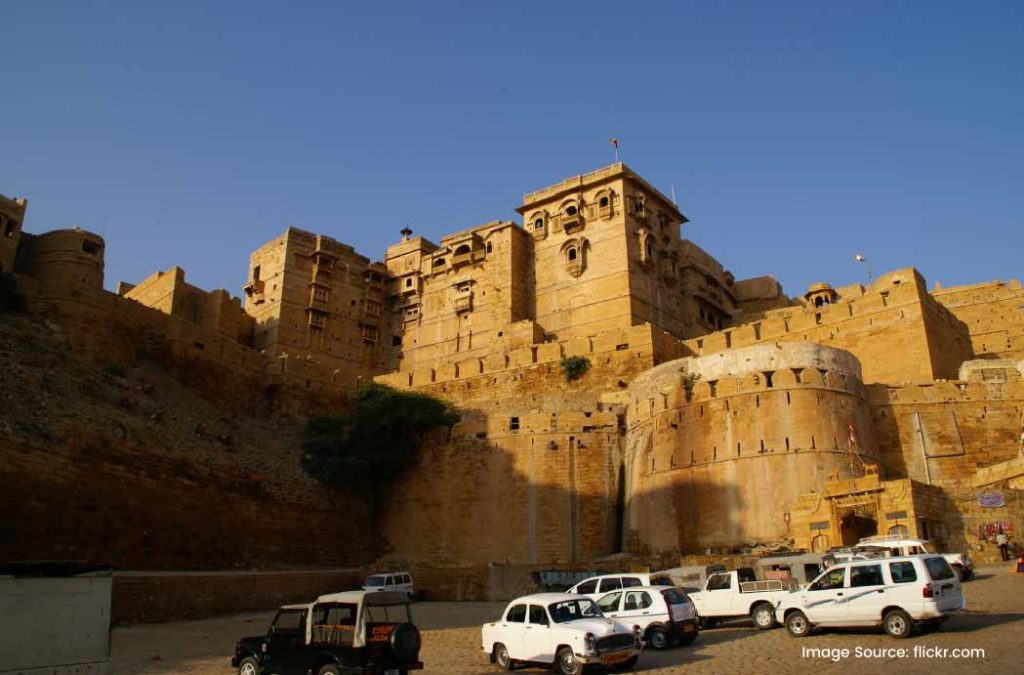
It stands like a golden mirage against the endless sands of Rajasthan. Known as Sonar Quila, it is a breathing city. What makes it special is its long-living pride. The fort has witnessed centuries of trade, warfare and devotion. Now that you seem interested, let’s discover everything about the majestic Jaisalmer Fort.
Understanding the History of Jaisalmer Fort
As you take a glance at Jaisalmer Fort, you must be wondering about its creation and construction. The foundation of this fort dates back to the 12th century. A Bhati Rajput ruler named Maharawal Jaisal Singh decided to establish a new capital. Legend suggests that Rawal Jaisal met a sage named Eesul.
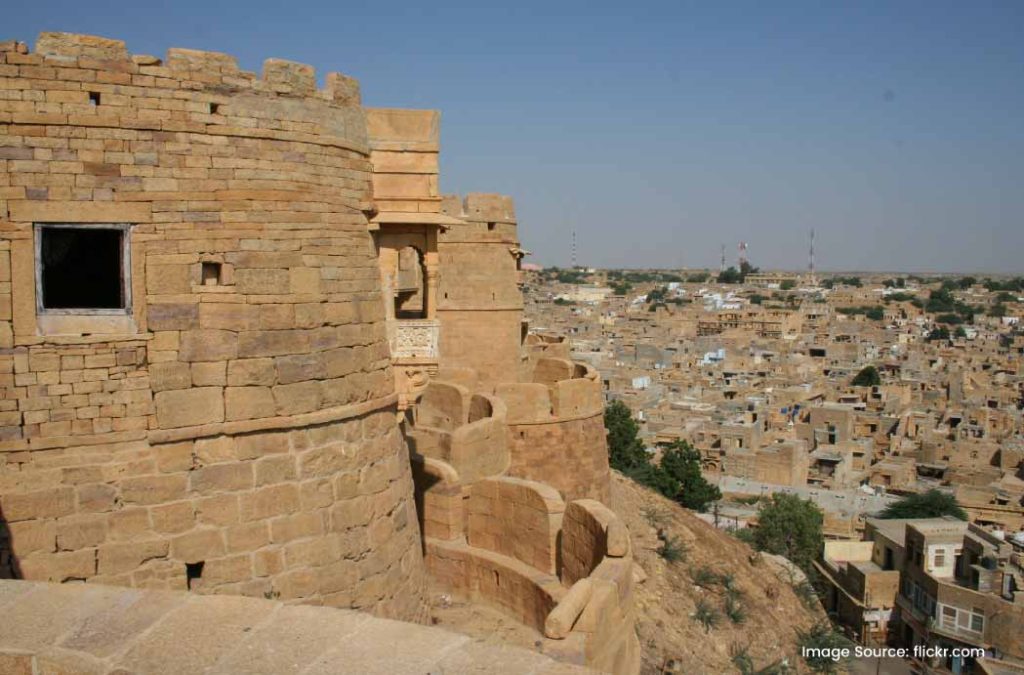
Next, the sage told him that Lord Krishna would build a fort atop the Trikuta Hill. He instantly saw this as a divine sign. Positioned along important Silk Route trade corridors, the city also prospered as a commercial centre. It had camel caravans carrying silk, spices, opium and precious stones. Hence, the route brought immense wealth to the city and its rulers.
Due to the divine and geographical benefits, the location offered military security too. So, Rawal Jaisal chose the strategic hill and laid the foundation of the Jaisalmer Fort. He sure didn’t know the fort would gain extreme popularity among locals as well as travellers.
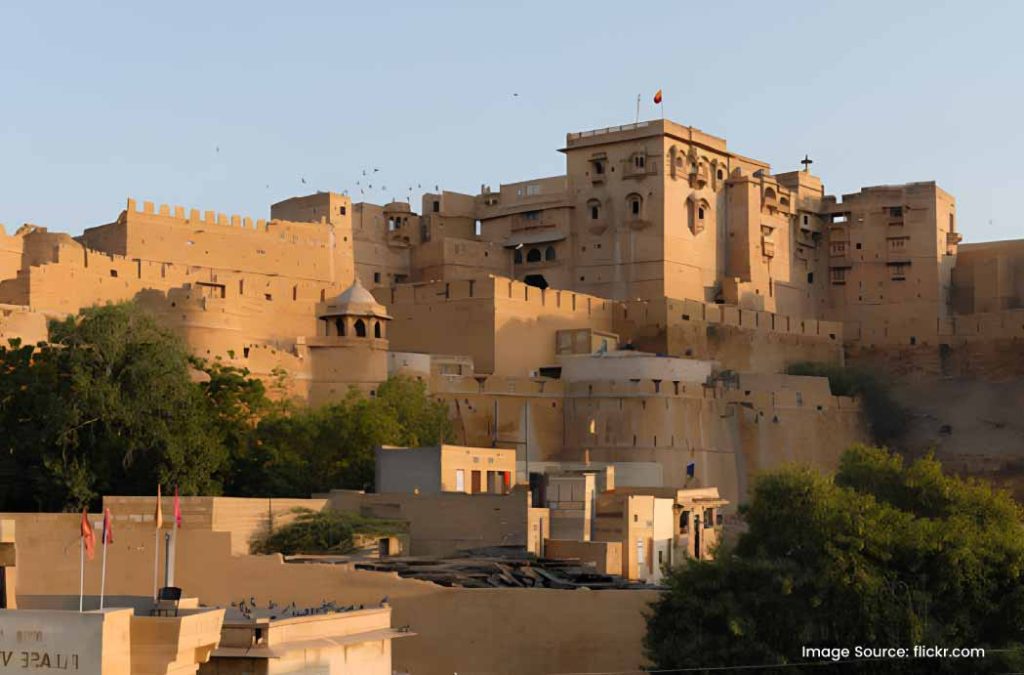
He then built the Sonal Quila in 1156 AD with hundreds of residents. It is indeed one of the rare forts where people still reside within its walls. No wonder the fort witnessed traditions, rituals, festivals and the daily life of locals. To see it all, you can easily book affordable hotels in Jaisalmer for a comfortable stay.
Where Stone Turns Golden: Jaisalmer Fort’s Architecture
The minute you enter any place of beauty, the first thing you notice is the details. While some historic places in Rajasthan are famous for intricate carvings, others have elaborate features. Jaisalmer Fort also has one of the most striking aspects. Yes, we are talking about golden-yellow sandstone. That exactly gives the fort its iconic glow.
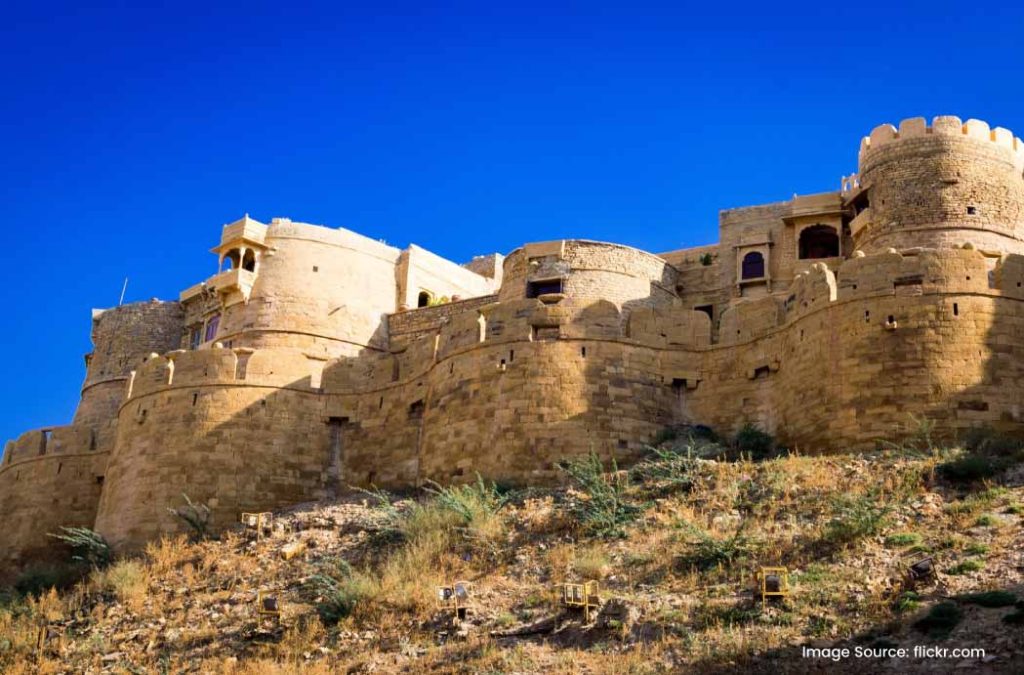
As the sunlight strikes the walls of the fort, it appears to shimmer like gold. What’s more? As the sun sets, the shades keep changing with the movement of light. You can see everything from honey-gold in the morning to amber at sunset. Witnessing the sunset is certainly one of the best things to do in Jaisalmer for a wonderful time.
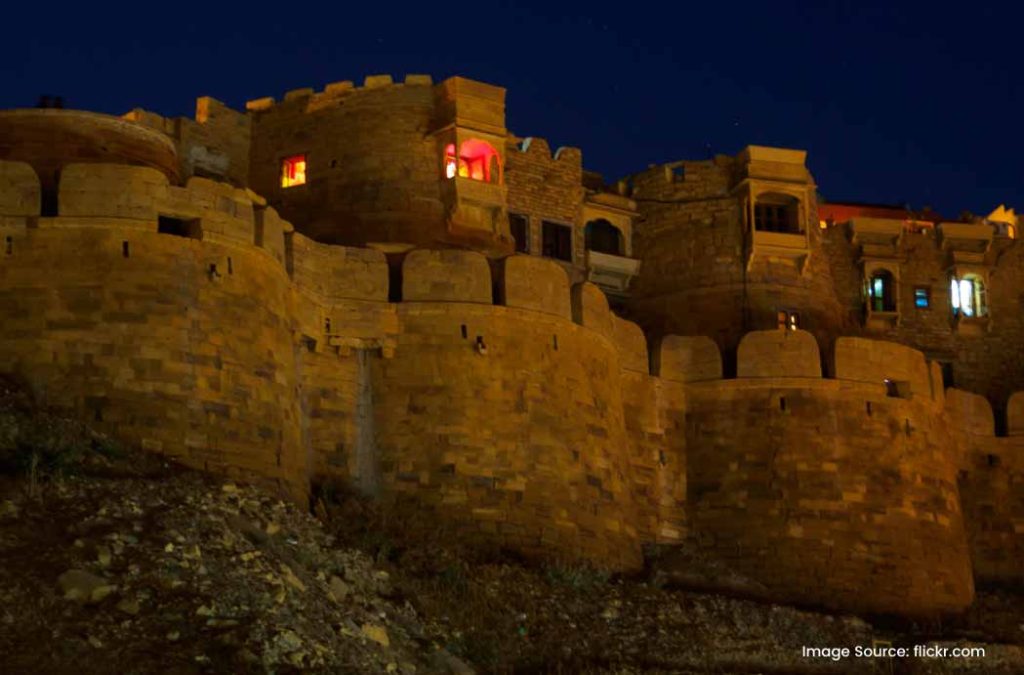
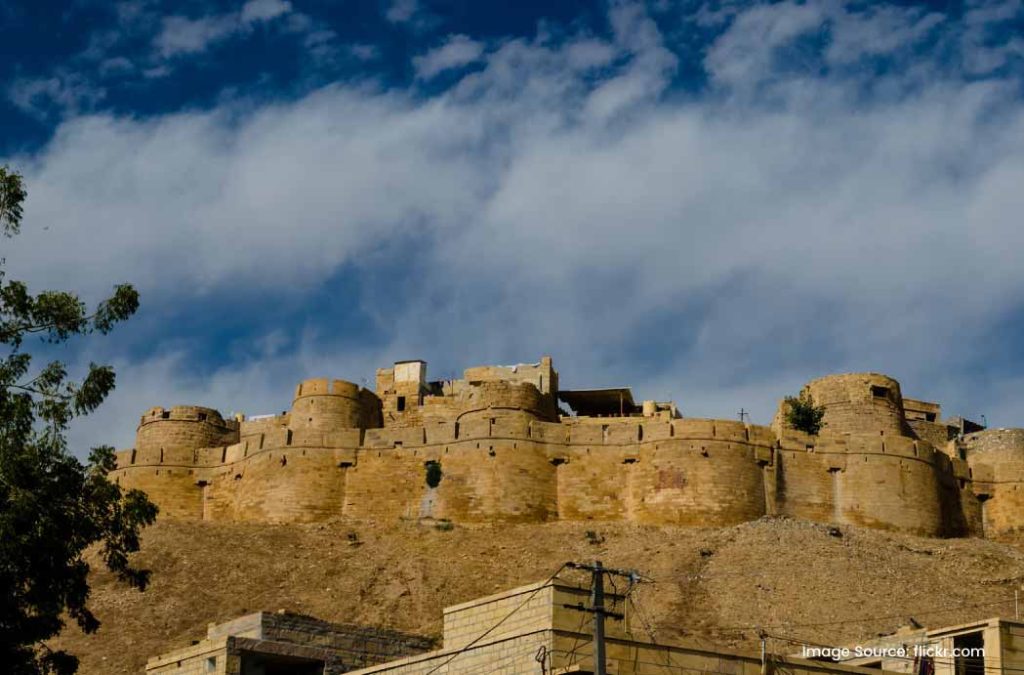
Can you believe the fort is encircled by 99 bastions? Most of them were constructed in the late 17th century. The fort also has massive walls rising sharply from the hill. Such a scenario creates an imposing silhouette visible from miles away.
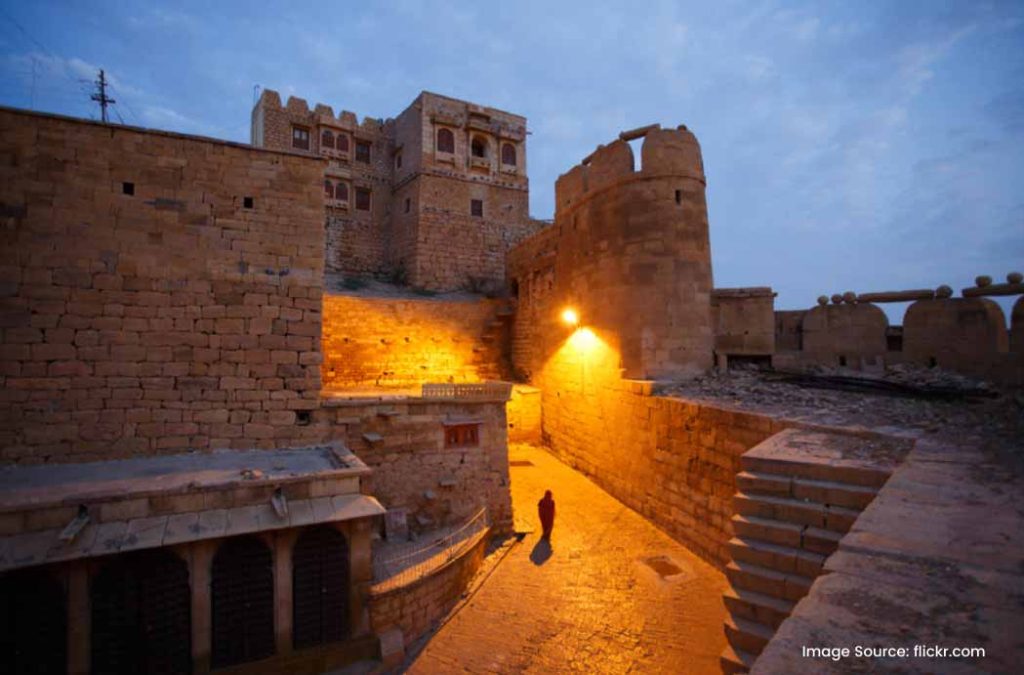
You can see how beautifully Rajput military architecture is showcased in every nook and corner. The winding entrances were meant to confuse invading armies. While the monument is all defensive from the outside, it is equally decorative from the inside. You can easily book affordable hotels in Jaisalmer for a comfortable stay.
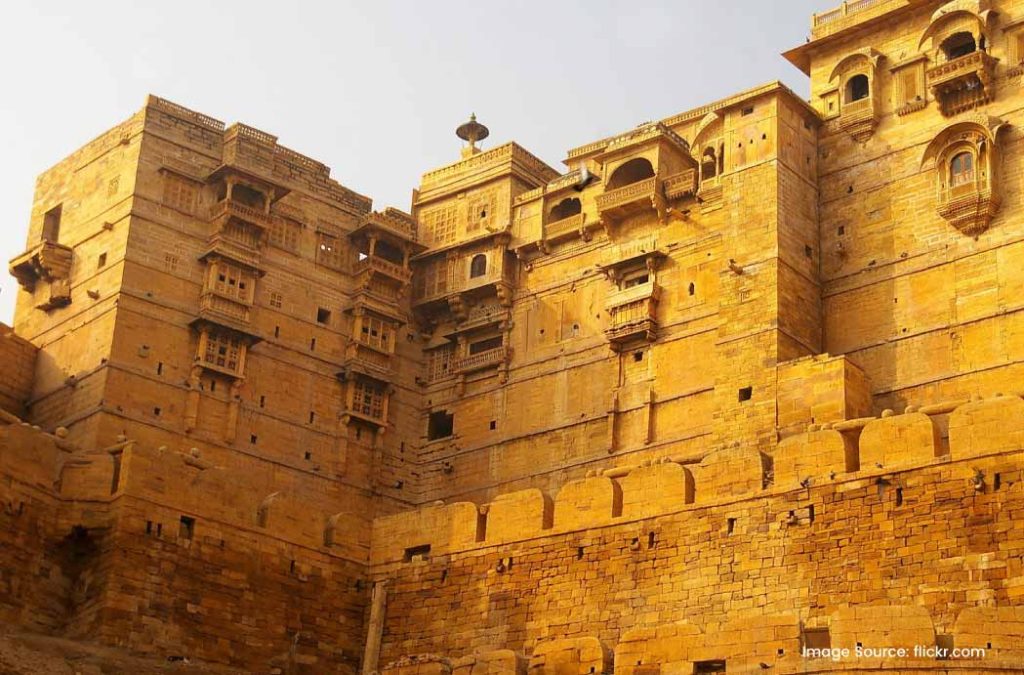
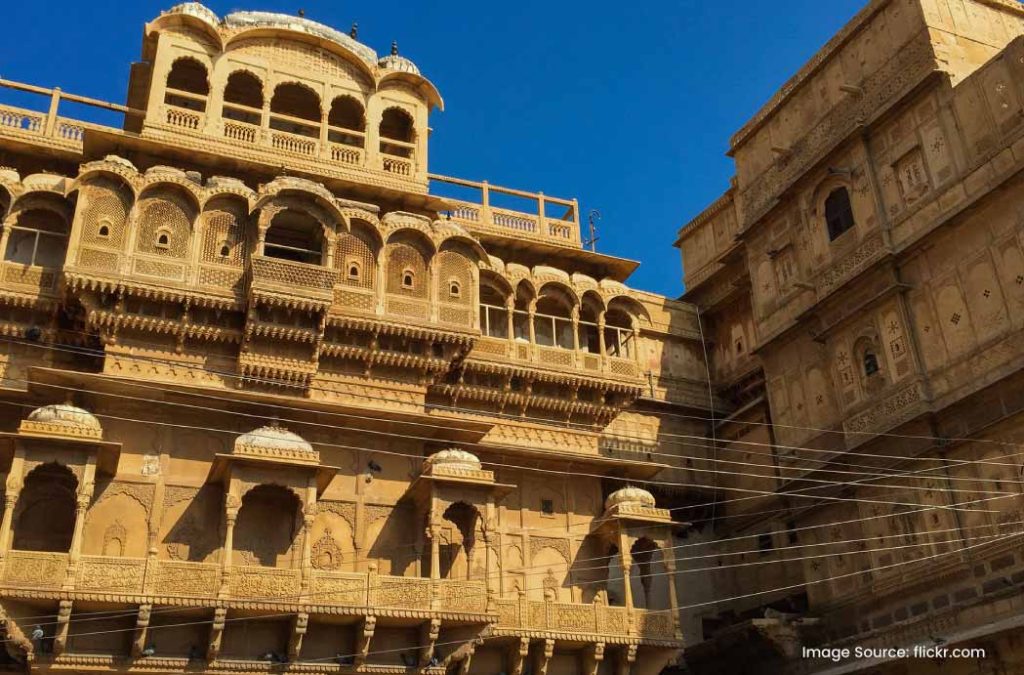
As you enter the fort, you can see elaborately carved jharokhas (balconies). This feature is seen in many forts in Rajasthan, being a major feature of ancient construction. The lattice windows and sandstone facades showcase the exquisite craftsmanship of local artisans. Despite the harsh desert environment, the structures display remarkable elegance.
Inside Jaisalmer Fort: Key Structures to See
1. Raj Mahal
As the name suggests, the Raj Mahal is the former residence of the Bhati Rajput rulers. It was indeed the political heart of the fort years ago. This palace served as the residence of the king. No wonder you can witness its grandeur and luxurious feel.
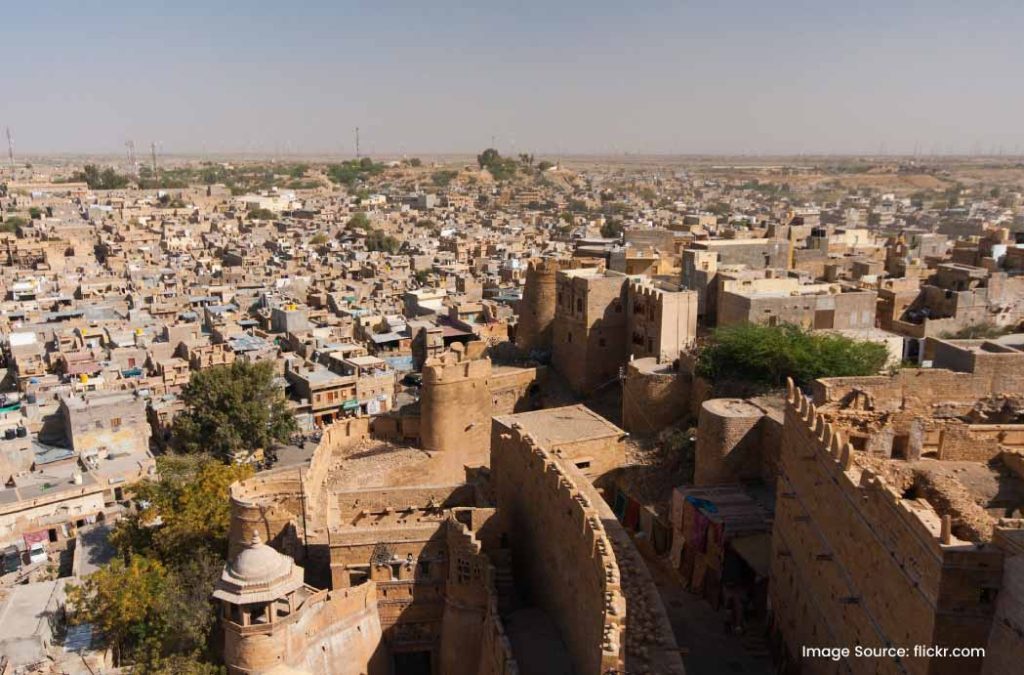
What’s more? This multi-storey structure has facades adorned with jharokhas, lattice screens and carved brackets. You can even see courtyards, audience halls and private chambers. It was the place for court proceedings and other administrative discussions.
In today’s time, some parts of the Raj Mahal are preserved as museums. You can take a look at many royal artefacts, weapons, costumes and paintings. So, make sure to book pocket-friendly hotels in Jaisalmer to experience it all.
2. Jain Temple Complex
While Jain temples in India are spread across the country, seven unique ones are within the Jaisalmer Fort. It is home to seven majestic Jain places of worship. You can see architecturally refined structures showcasing the wealth and influence of Jain merchants.
Built between the 12th and 16th centuries, the temples are dedicated to various Jain Tirthankaras. Major Tirthankaras include Rishabhdev, Sambhavnath, Parshvanath and Shantinath. Due to the presence of these temples, the fort attracts a large footfall of devotees too.
If you have ever seen the Dilwara temples of Mount Abu, you can closely relate to these. Constructed entirely of yellow sandstone, the temples have arched gateways. The finely carved pillars tell you stories of the bygone era. Even the ceilings and domes are constructed in a way that makes you feel cooler as you go further in.
These temples are particularly popular for depictions of Jain cosmology. You can see various mythological scenes, floral motifs and geometric patterns all around the place of worship. By booking affordable hotels in Jaipur or Jaisalmer, you can easily spend a good amount of time admiring their beauty.
3. Laxminath Temple
After seeking blessings from the Jain Tirthankaras, it is time to head to the Laxminath Temple. It is the main Hindu place of worship inside the fort. Guess what? The temple is active even in today’s time.
Dedicated to Lord Vishnu and Goddess Lakshmi, the temple dates back to the 12th century. You can witness the traditional Hindu architectural style. The existence of this temple showcases the harmony of the Hindu and Jain communities.
4. Residential Havelis
When in Rajasthan, you cannot miss seeing some of the top-notch havelis of India. Did you know that a massive portion of Jaisalmer Fort consists of residential havelis? A lot of them are still inhabited, making it a lively place.
While the lanes are narrow, you can see multi-storey homes. As they are placed closer to each other, it provides insulation against heat. The architecture also consists of stone-carved facades, courtyards for ventilation and roofs for rainwater collection.
5. Fort Gates and Defensive Structures
One beautiful thing about most forts in Jaisalmer is that they are always built to protect the communities living inside. So, most of these structures have multiple gates (pols). Such is the case with the Jaisalmer Fort. The Akshaya Pol was used for commemorating victories back then.
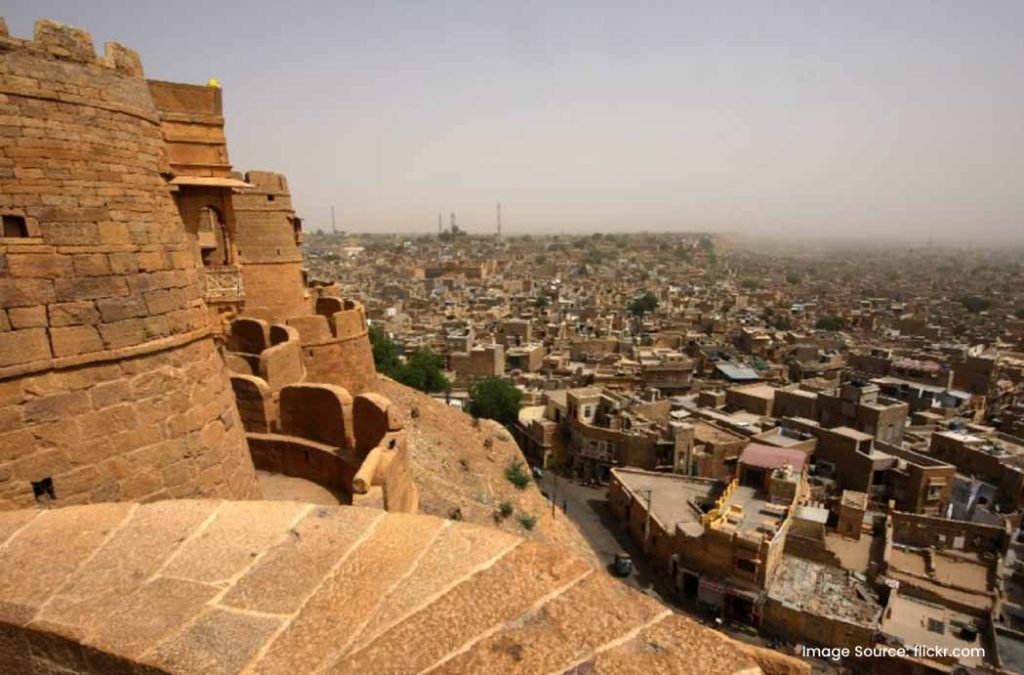
Suraj Pol is the eastern gate named after the Sun God. You can also see Ganesh Pol, decorated with a Ganesh image for protection. The next is Hawa (air) Pol, designed to channel desert winds. With zigzag entrance layouts, they prevented direct attacks. No wonder every gate has its unique significance.
6. Market Areas
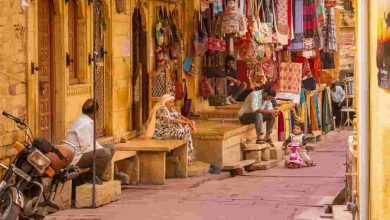
This living fort of Jaisalmer surprises you like no other place. Did you know it functioned as a trade hub? It was due to its location on the Silk Route branches. So, the fort started establishing market and commercial areas within its complex. You can see small lanes with age-old shops.
Most of these shops sell textiles, jewellery and leather products. You can buy various handicrafts representing the culture and heritage of the state. No wonder they become one of the best souvenirs from India for your loved ones. These markets are essential as they continue to support local livelihoods.
A Fort That Lives and Breathes
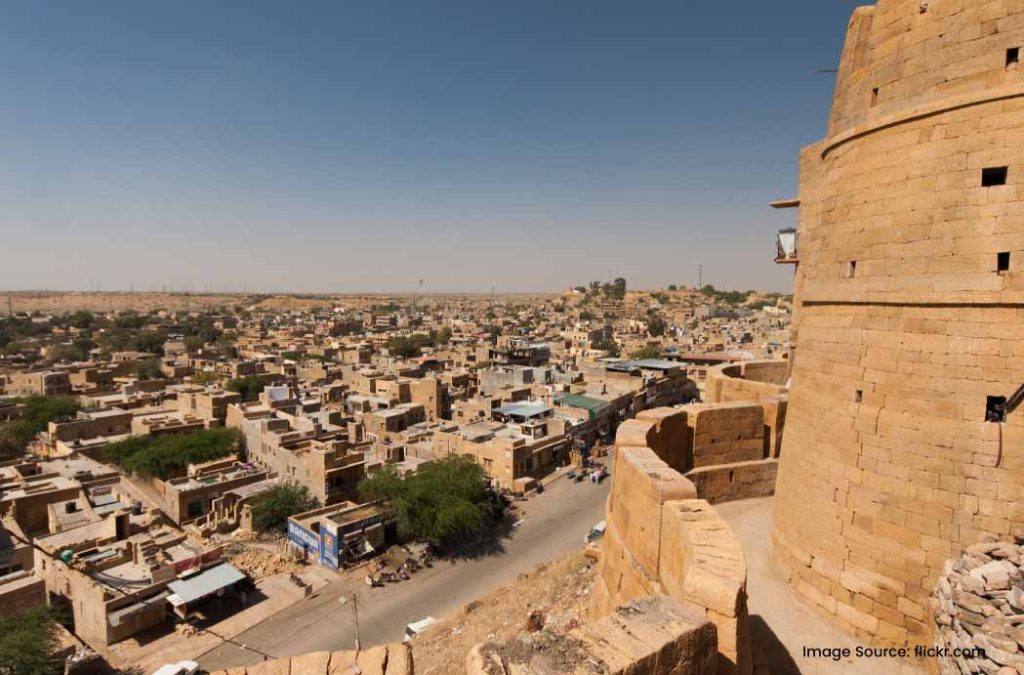
You must have seen many gigantic forts of India. While some forts remain in ruins, others are home to temples and palaces within. Unlike forts that exist as silent relics of the past, this UNESCO World Heritage Site pulses with life. Nearly a quarter of the city’s population still lives inside its walls.
It has everything for everyday life, including temples, shops, cafes and markets. Walking through its narrow lanes feels like stepping into a different universe. Children play outside ancient homes, women draw water from old wells and priests perform rituals in centuries-old temples.
Life here follows a rhythm shaped by history and tradition. If you wish to know more, it is best to strike up conversations with shopkeepers or locals around. Booking budget hotels in Jaisalmer is highly recommended for a pleasant stay.
How to Reach Jaisalmer Fort?
By Air
The nearest airport to the fort is Jaisalmer Airport, located at a distance of 8.8 kilometres. It is a civil-military airport. Hence, it offers seasonal flight connectivity from cities like Delhi, Jaipur and Mumbai.
For better flight options, you can travel to the Jodhpur Airport. It is recommended to book pocket-friendly hotels in Jodhpur to rest well before travelling. The airport is 267 kilometres from the fort. From any of these airports, you can hire a taxi or take an auto-rickshaw.
By Rail
If you are planning to travel via railway, Jaisalmer Railway Station is the closest railhead. It is situated just 2.2 kilometres from the fort. The station is connected to major cities. So, you can easily find regular train services from Jodhpur, Jaipur and Delhi. You can opt for an auto-rickshaw, cycle-rickshaw or taxi from here.
By Road
Jaisalmer has good road connectivity with the major cities of Rajasthan. You can travel from nearby locations, including Jodhpur, Bikaner and Jaipur. If you are looking for a cheaper travel option, opt for Rajasthan State Transport buses. You can also travel via private buses, taxis or private cars. Once in the city, the fort is easily accessible by local transport.
Best Time to Visit Jaisalmer Fort
Winter (October to March)
If you are planning a journey to the best places to visit in Jaisalmer, Winter is the best time to do so! The weather remains pleasant, perfect for sightseeing. The temperature ranges between 10°C and 25°C, making it comfortable to explore the fort.
Even walking through the narrow lanes, temples and havelis becomes comfortable during winter. Evenings are cooler, ideal for cultural programmes and desert activities. So, make sure to book affordable hotels in Jaisalmer for a lovely stay.
Summer (April to June)
Summer in Jaisalmer is extremely hot. The temperatures often soar above 40°C. Exploring Jaisalmer Fort during this time can be exhausting. However, early mornings and late evenings can still be manageable. The advantage of visiting in summer is fewer tourists. You can also find accommodation at low prices. The season is advisable only if you can tolerate intense heat.
Monsoon (July to September)
Monsoon brings occasional rainfall and slightly cooler temperatures. The temperature ranges between 25°C and 35°C. It is the second-best time to visit Jaisalmer for exploring around. The desert landscape becomes surprisingly fresh. You can explore the fort comfortably during this time. However, be aware of occasional humidity.
Things To Know Before Visiting Jaisalmer Fort
- Carry cash, as some small shops and cafes inside the fort may not accept cards or UPI.
- Lanes can feel confusing, so it is best to hire a local guide to understand the fort better.
- Be cautious of overpriced souvenirs. It is best to compare prices before buying.
- Respect the privacy of locals while clicking photos inside residential lanes.
- If you are sensitive to dust, carry a light scarf or mask.
- Plan at least 2 to 3 hours to explore the fort comfortably.
- Avoid feeding monkeys or pigeons near temples.
- Be cautious at viewpoints as there are no safety railings in some spots.
A Journey to the Historic Jaisalmer Fort!
Jaisalmer Fort is more than just a defensive structure. It is, in fact, a self-sustaining medieval city. You can see how a beautiful fort stands as a rare example of where history continues to live. Here, every corner tells you a tale of ancient times.
Narrow lanes echo with footsteps, temple bells ring at dawn and shopkeepers greet travellers. Families continue traditions passed down over generations. Jaisalmer Fort is not merely a tourist attraction. It is an experience that transports you across time.