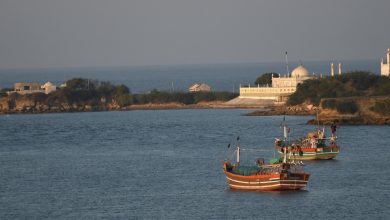
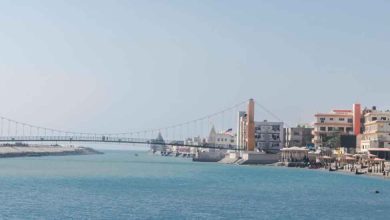
India is encircled with stories of mythology, no matter where you go. While some places are steeped in mythology, others take you into the deepest realms of spirituality. One such beautiful place resides in the heart of Gujarat. Known as the land of Lord Krishna, the Dwarkadhish Temple is a magical place of worship.
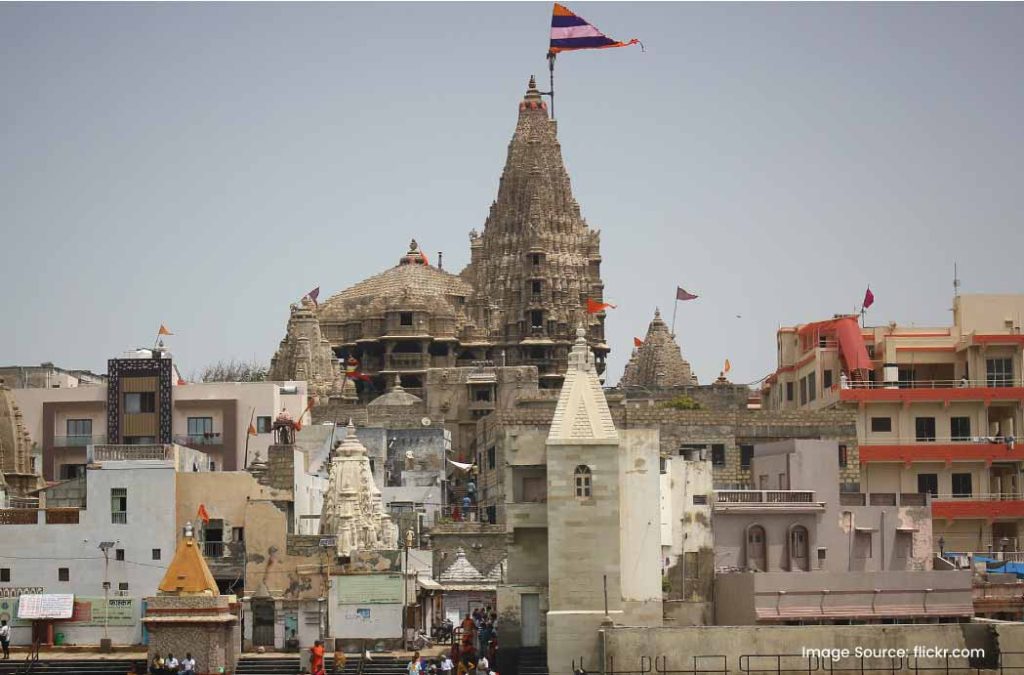
Popularly known as Jagat Mandir, it is a living legend standing on the western edge of India. The temple beautifully showcases history, mythology, devotion and architecture. You get to see all of it in a powerful yet humbling way. If you are up for a pleasant journey to seek the blessings of Lord Krishna, check out this blog for all essential details.
Dwarkadhish Temple: Significance and Connection to Lord Krishna
Located in Dwarka, this ancient temple is dedicated to Lord Krishna. He is revered here as Dwarkadhish. The word means “King of Dwarka.” So, the locals here have believed him to be their king for decades now. Dwarka is not merely a city but a divine kingdom once ruled by Krishna himself.
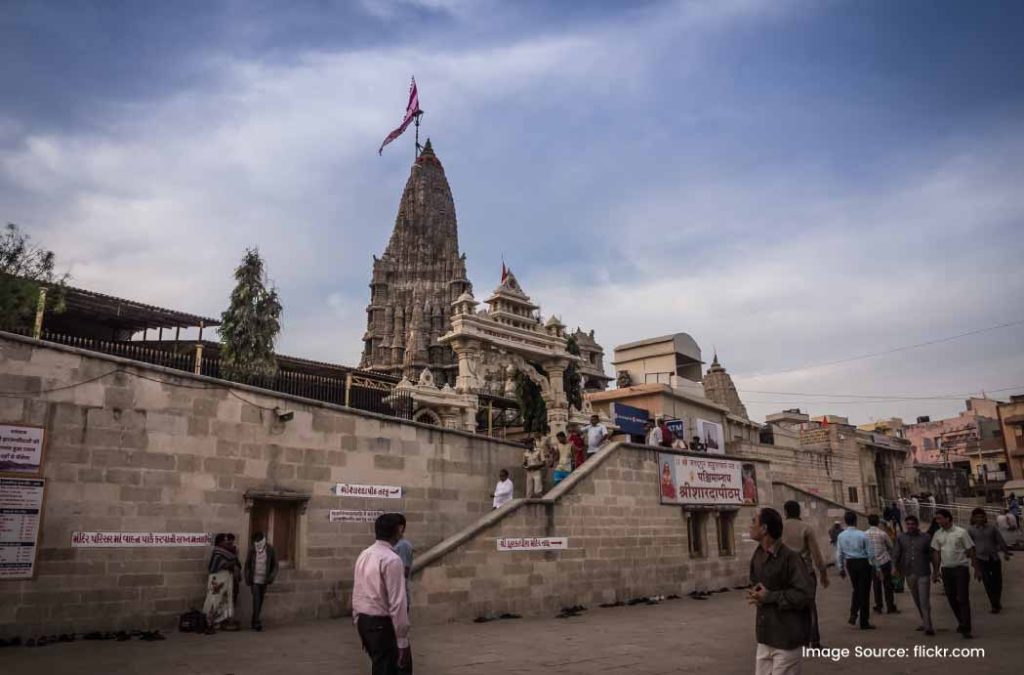
What’s more? The Dwarkadhish temple is also one of the Char Dham yatra destinations in Hinduism. Moreover, it forms an important part of the Sapta Puri, the seven holy cities believed to grant liberation. No wonder millions of devotees visit this spiritual land for salvation. Here, your journey is all about faith and timeless stories you get to hear.
You can enjoy a comfortable stay by booking affordable hotels in Gandhinagar or Ahmedabad.
The Mythological Significance of Dwarka
Before understanding the temple in particular, it is important to know about the city. According to Hindu scriptures, Dwarka was a magnificent city established by Lord Krishna. He came here after he left Mathura. He especially chose the western coast and built a grand city for his people because he wanted to protect everyone from repeated attacks by King Jarasandha.
Do you know Dwarka is also mentioned in ancient texts like the Mahabharata, Harivamsa and Bhagavata Purana? They describe this city as a prosperous kingdom. The descriptions also talk about palaces, gardens, lakes and divine architecture.
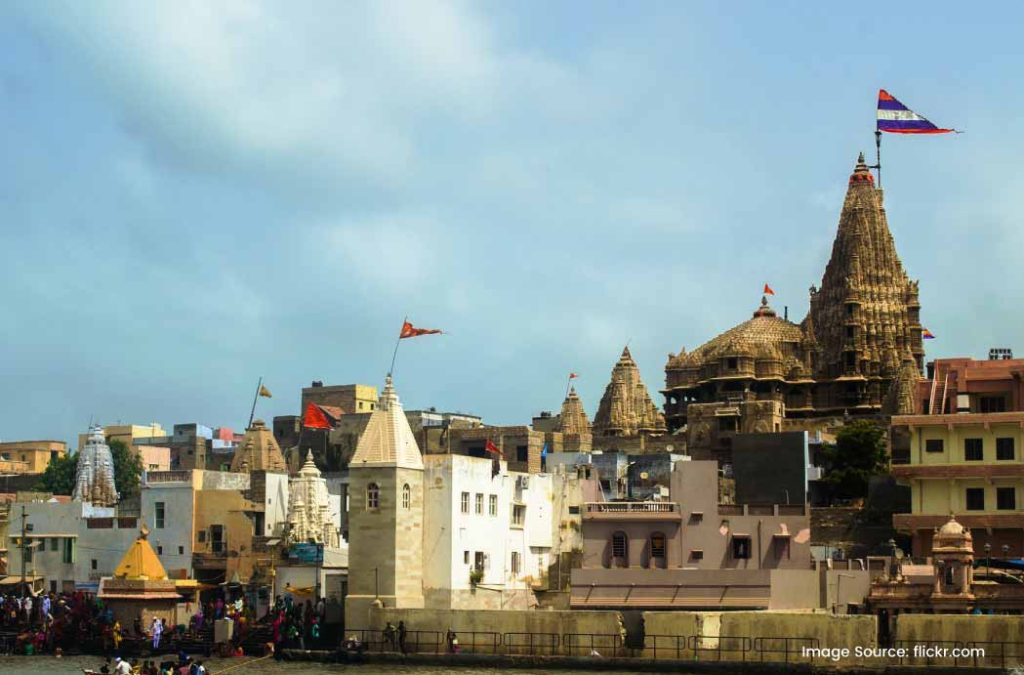
Millions of years ago, Lord Krishna ruled Dwarka as a wise king. He guided people with dharma while balancing his role as a warrior and divine incarnation. Do you know why you cannot see the city today as it was back then? After Krishna’s departure from the mortal world, it is believed that Dwarka was submerged into the sea. Hence, it symbolised the end of the Dwapara Yuga.
Unveiling the History of Dwarkadhish Temple
Many famous temples in India were built in ancient times. Some of these places of worship cannot even be traced back to their original year of formation. The current structure of Dwarkadhish Temple is an old place of divinity. It is believed to have been constructed around the 8th to 10th century CE.
Many historians also suggest that temples existed at the same site earlier than this. Over centuries, the temple has been renovated and restored. It faced natural wear, invasions and coastal conditions. However, the powerful aura of this temple continues to awe you.
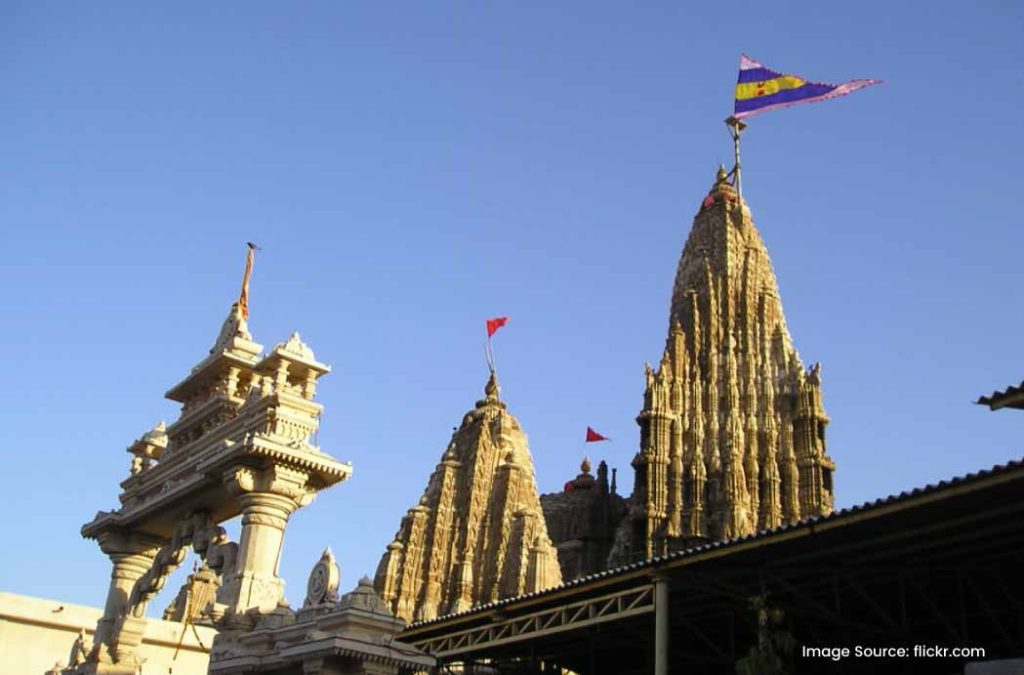
What’s more? The temple has strong associations with Adi Shankaracharya. He was a great philosopher-saint. It is believed that he established the Dwarka Math nearby. It also happens to be one of the four cardinal mathas that helped revive Hindu philosophy across India.
Despite invasions and changing rulers, the Dwarkadhish Temple remains a symbol of faith and resilience. The present-day temple is believed to stand near or over the original Dwarka. No wonder it is one of the most spiritually charged locations in India. You can easily book pocket-friendly hotels in Ahmedabad for a comfortable stay after the journey.
Legends Associated with Dwarkadhish Temple
As the country is surrounded by temples, you cannot escape their tales. There are several fascinating legends surrounding the Dwarkadhish Temple, too. One popular belief states that Sudama, Krishna’s childhood friend, once visited Dwarka. He was welcomed with royal honour despite his poverty. This story symbolises Krishna’s belief in equality and unconditional friendship.
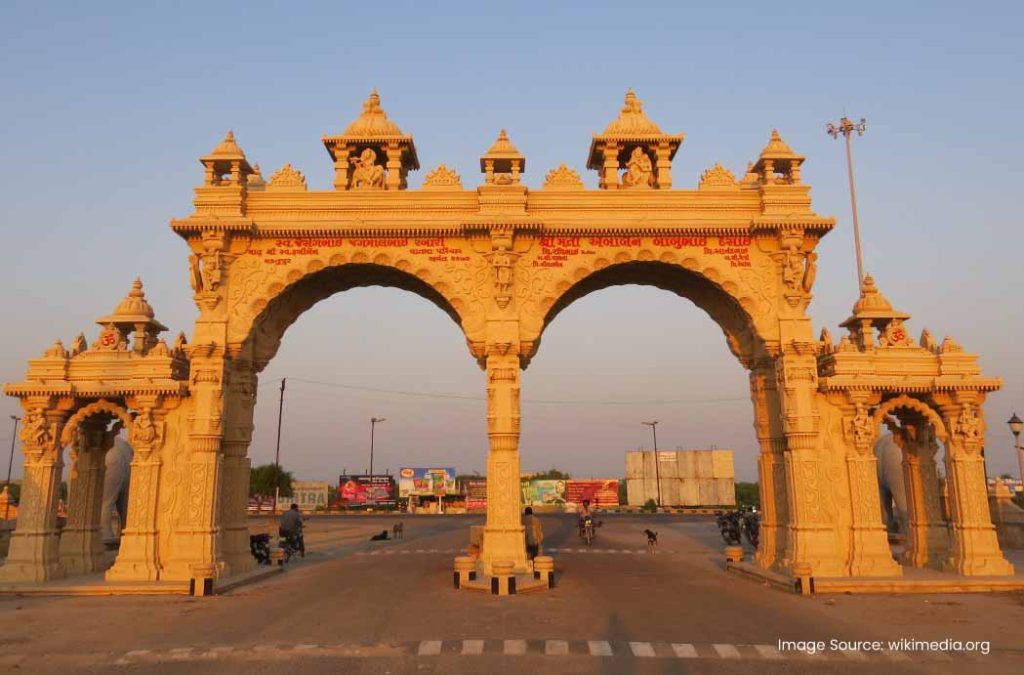
Another legend is around Meerabai, the saint-poet devoted to Krishna. She submerged into the idol of Dwarkadhish after singing her final bhajan here. Due to this, devotees consider this event as the ultimate union of devotee and deity. Such legends continue to inspire bhakti traditions. They also give a spiritual narrative passed down through generations.
Witnessing the Architectural Grandeur
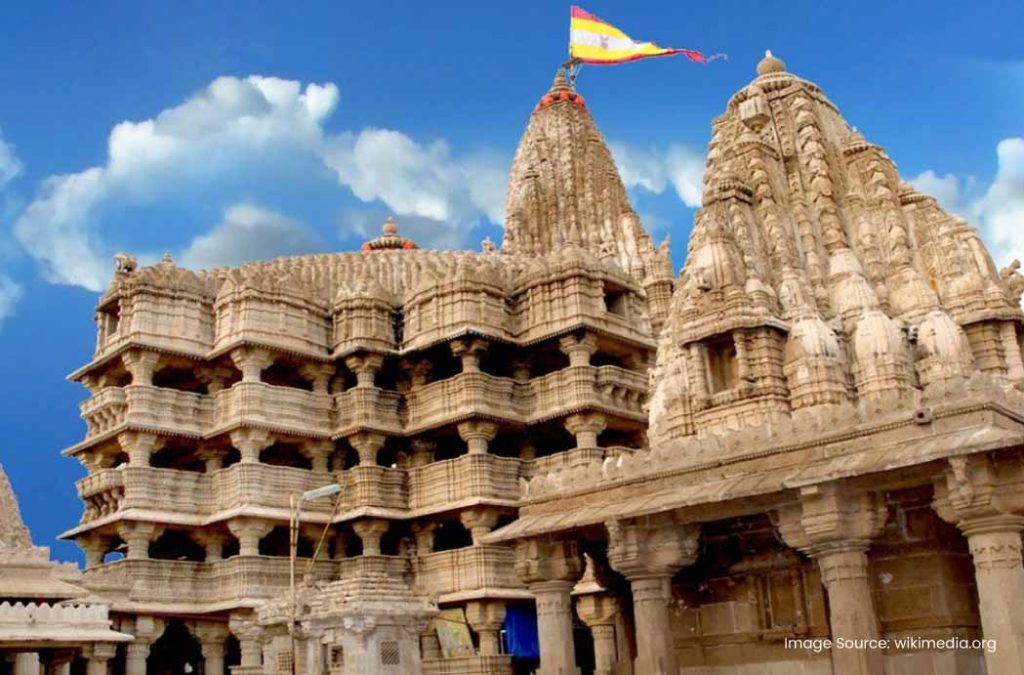
Dwarkadhish Temple is a stunning example of Gujarat-style architecture. Similar architecture can also be seen at various Jain temples in India, particularly in this state. It is indeed the grand architecture which attracts travellers from all around the globe. Let’s understand the structural glory of this divine space.
1. Five-Storey Structure
The minute you see the majestic temple, you can see it rising about 78 meters high. This five-storey high place of worship dominates the Dwarka skyline. You can literally see it from far away. Interestingly, the temple is supported by 72 intricately carved pillars. Each pillar reflects exceptional craftsmanship.
2. Main Shikhara
Just as you admire its beauty, you instantly appreciate the main shikhara. Built in the Chalukya style, the shikhara is characterised by a tall and curvilinear spire. The interesting part is the strong stone construction. It is especially suitable for coastal conditions.
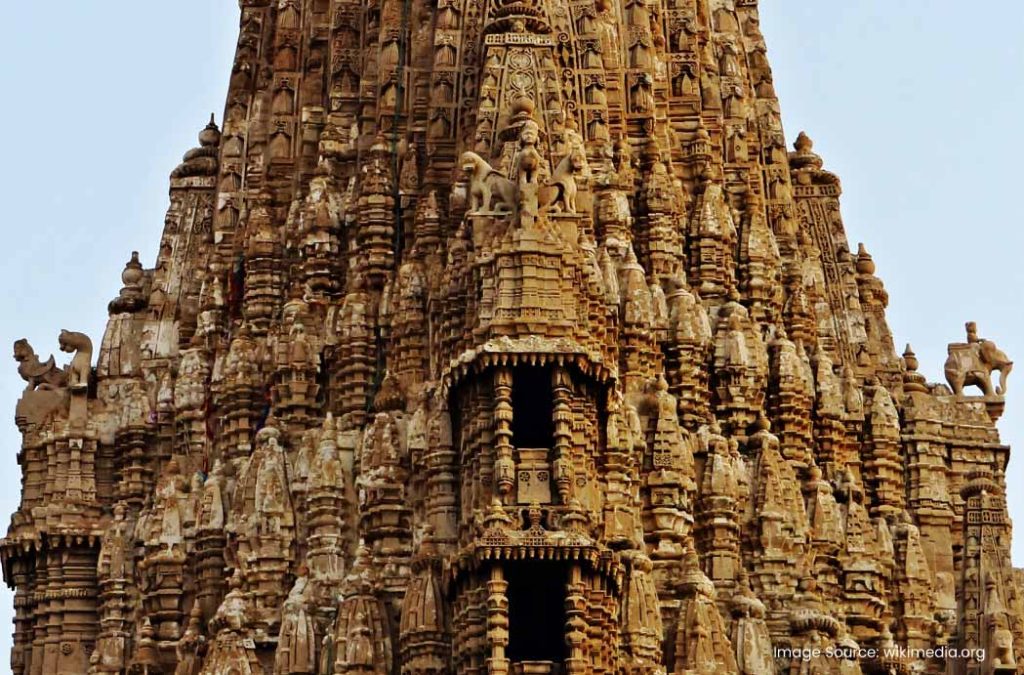
Atop the shikhara flies a large dhwaja (flag). That does make it a highlight. The flag has symbols of the sun and the moon. Such a combination signifies Krishna’s eternal presence and the continuity of dharma. Lastly, it is also ceremonially changed five times a day.
3. Garbhagriha
Garbhagriha is the main sanctum of the temple. It forms the spiritual core of the Dwarkadhish Temple. As you enter, you can see that it houses the idol of Lord Krishna as Dwarkadhish. The idol is carved from dark stone and adorned with traditional ornaments.
While the sanctum is compact and dimly lit, it creates an atmosphere of deep reverence. The architecture inside the sanctum is minimal. It instantly directs your focus inward. Such a space showcases purity, devotion and the presence of the divine. To experience it all, make sure to book pocket-friendly hotels in Ahmedabad for a comfortable stay.
Gomti River and Sacred Bathing near Dwarkadhish Temple
The beauty of Dwarkadhish Temple instantly elevates with the Gomti River flowing beside it. The river first meets the temple before touching the magical Arabian Sea. While it is in size, the river is considered extremely sacred.
You can see pilgrims traditionally taking a holy dip at the ghat. Most devotees do this before entering the temple. It is believed that the river purifies the soul and prepares the mind for darshan. What’s more? The confluence of the Gomti River and the sea is viewed as a powerful spiritual junction. No wonder devotees flock here in large numbers.
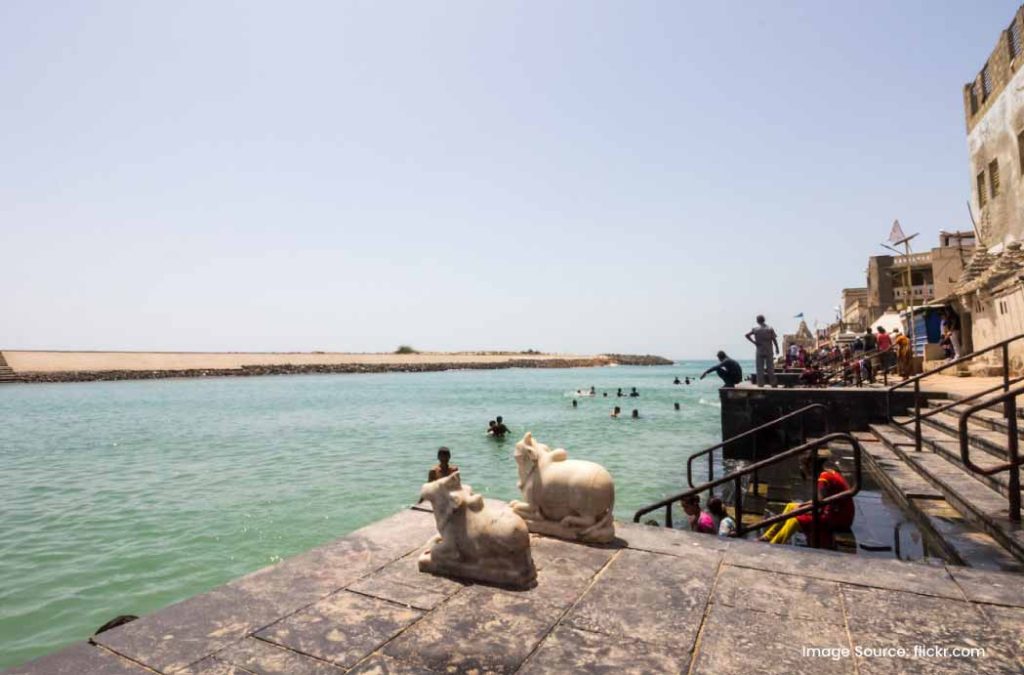
Various rituals, including tarpan (ancestral offerings) and daan (charity), are commonly performed here. You witness all the liveliness from early morning. The area is filled with priests, pilgrims and wanderers. You can also meditate here as the gentle sound of flowing water creates the perfect music for self-reflection.
Local Culture around Dwarkadhish Temple
You can only truly understand the essence of a place when you experience the life around it. The daily life of locals revolves around the temple. They often have their small shops in the markets. Women generally engage in Haveli Sangeet and traditional Gujarati devotional music. You can even be a part of rhythmic bhajans and aartis.
What’s more? Local craftsmen create temple-related souvenirs, flags, idols and religious artefacts. Hence, they play a major role in elevating cultural heritage while making a livelihood out of that. Simply by striking up conversations with them, you can discover their simplistic lifestyle in Dwarka.
While roaming around one of the best places to visit in Dwarka, you can sense emotionally powerful energies. The continuous sound of bells makes it soothing to be on the land. You can also hear chants of “Jai Dwarkadhish,” creating a deep sense of devotion. So, make sure to reserve budget hotels in Ahmedabad or Gandhinagar for a pleasant stay.
Festivals Celebrated at Dwarkadhish Temple
How can you miss the auspicious occasion of Janmashtami? Dwarkadhish Temple celebrates this festival with immense joy and grandeur. As it is considered to be the birthplace of Lord Krishna, the temple is beautifully decorated with garlands and lights. Even the devotional songs fill the air with rhythm.
Most Krishna temples in India celebrate Holi with utmost joy. The same is the case with the Dwarkadhish Temple. Known as Phoolon Ki Holi, the festival is celebrated with flowers. So, you can experience a blend of music and devotion. Even special offerings and rituals are performed. So make sure to book affordable hotels in Gandhinagar or Ahmedabad for a pleasant stay.
How to Reach Dwarkadhish Temple?
By Air
Dwarka does not have its own airport. However, you can travel via two convenient nearby options. The nearest air route was Porbandar Airport, which is approximately 110 kilometres from the temple. It is important to note that there are only a few flights to this one.
The next option to reach the temple is via Jamnagar Airport. It is nearly 136 kilometres from the temple. From both airports, you can reach by taxi or bus. It takes around 2 to 4 hours, depending on the traffic.
By Rail
If you prefer to travel via train, Dwarka Railway Station is the best choice. The temple is approximately 2.9 kilometres from the station. Moreover, it is connected to major cities in Gujarat and other parts of India. You can easily find trains from Ahmedabad, Rajkot, Vadodara, Surat and Mumbai
By Road
Dwarka is well-connected by a road network. It is also a popular route for pilgrims and tourists. The nearest city is Jamnagar at 141 kilometres, followed by Rajkot, which is at 235 kilometres.
Apart from this, you can travel via state transport buses (GSRTC) for a cheaper travel journey. Similarly, private buses operate from nearby cities. For a more comfortable journey, you can hire a cab or a taxi from any of the cities.
Things to Know Before Visiting Dwarkadhish Temple
- Reach 30 to 45 minutes earlier for aarti darshan as the temple gets crowded.
- The temple remains crowded on weekends, Ekadashi, Janmashtami and holidays. So, plan your journey accordingly.
- Wear modest and comfortable clothing. Avoid shorts, sleeveless tops and short skirts.
- It is advisable for women to carry a dupatta or a stole.
- Footwear must be removed outside the temple.
- Mobile phones, cameras, bags and electronics are not allowed inside the premises.
- Entry may pause during aarti. It is best to patiently wait in the queue.
- Beware of fake priests offering special darshan for money.
- Donate only at official counters.
Dwarkadhish Temple Invites You For a Divine Time
Dwarkadhish Temple is indeed a sacred bridge between mythology and reality. You learn a lot about faith, history, land and sea. No matter if you are a pilgrim or a wanderer, this place leaves an indelible mark on your soul.
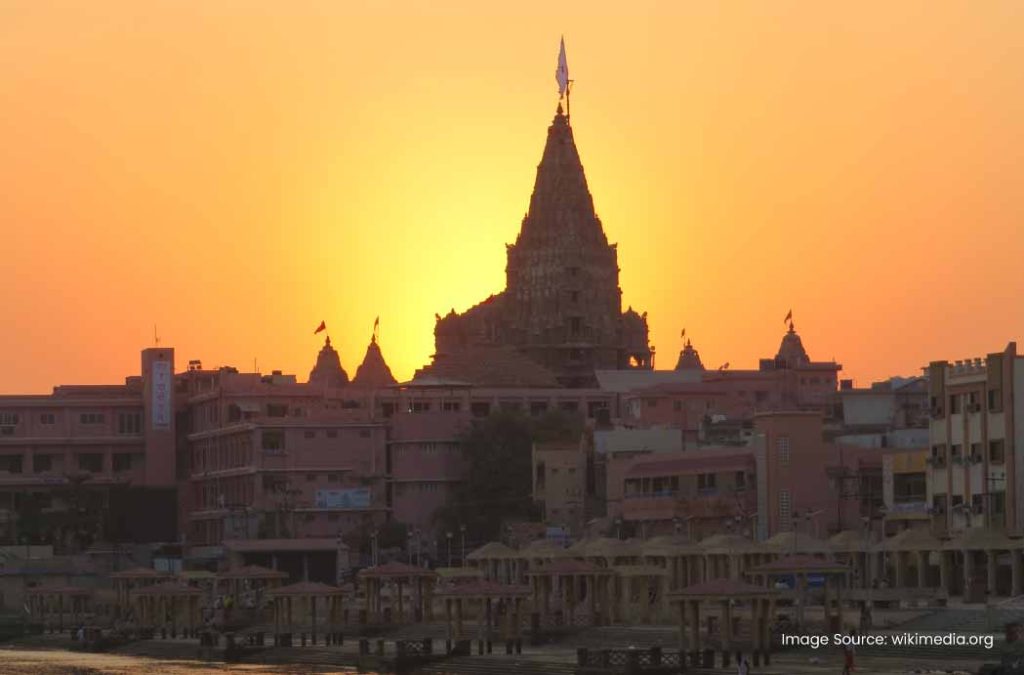
As you stand near the divine temple, you can hear the whispers of the Arabian Sea fused with the melodious bells. The temple invites you to remember, believe and experience the divine kingdom of Lord Krishna.